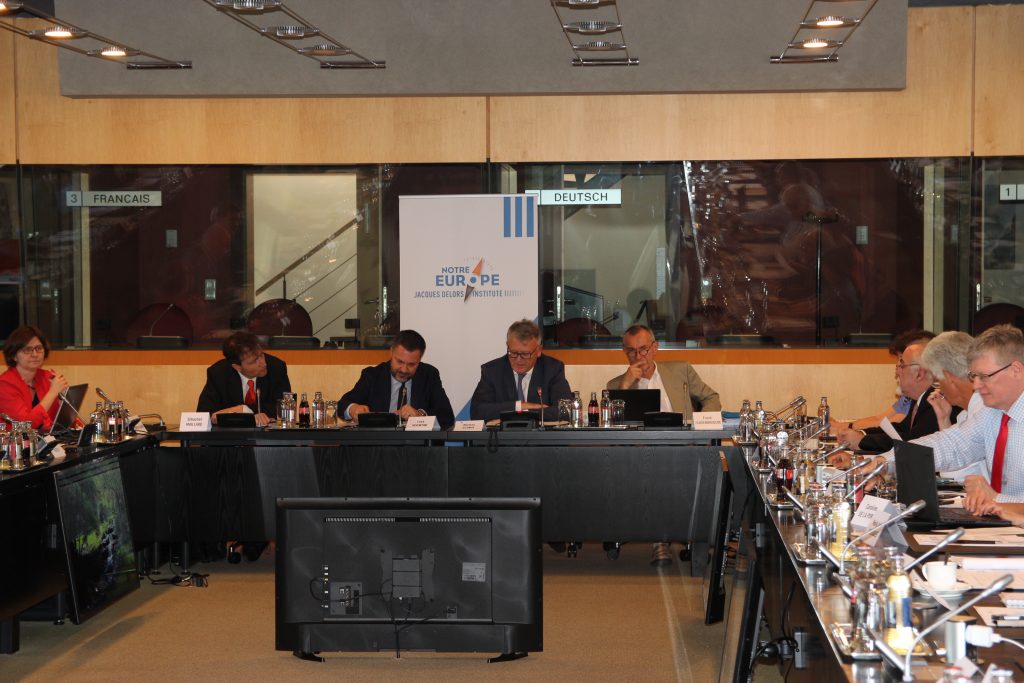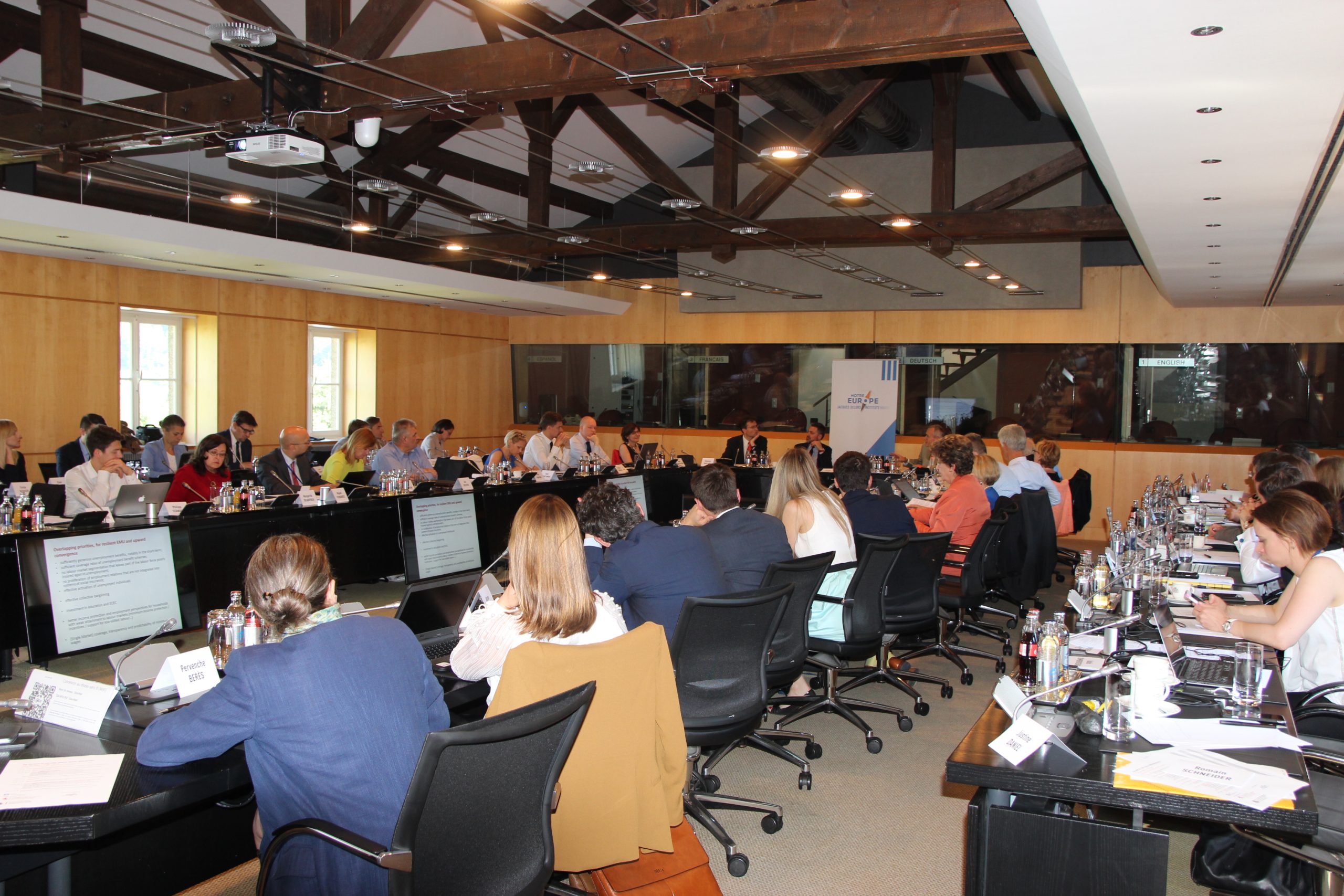
Luxembourg, 20 June 2018 – The reform of the EMU: which social dimension?
The Jacques Delors Institute organizes, in collaboration with the Ministry of Labor, Employment and the Social and Solidarity Economy of Luxembourg and the services of the Deputy Prime Minister and the Ministry of Employment, Economy and Consumers, responsible for foreign trade, a high-level conference on the social dimension of the Economic and Monetary Union and possible avenues for reform to strengthen the European social pillar.
The reform of the Economic and Monetary Union (EMU) will be at the heart of the European agenda in the coming months. This reflection on the deepening of EMU should not be limited to economic, budgetary or financial stakes. EMU also has a social dimension that needs to be clarified. What social convergence is necessary for the proper functioning of EMU? What are the instruments to put in place or strengthen to achieve this social convergence? How to improve the social governance of EMU? It is during a high-level seminar that the Luxembourg government, in partnership with the Jacques Delors Institute, seeks to answer these questions in order to contribute to the debate on the deepening of EMU.
Programme
15:00 > 15:10 Introduction by Nicolas Schmit, Minister for Labour, Employment and the Social and Solidarity Economy, Luxembourg
15:10 > 15:20 Keynote speech by Luca Visentini, General Secretary of the European Trade Union Confederation
15:20>16:45 Panel 1: What social convergence for the euro area?
Agnès Bénassy-Quéré, professor at the Paris School of Economics
Barbara Kauffmann, Director for Employment and Social Governance at the European Commission
Frank Vandenbroucke, professor at the University of Amsterdam
Chair: Sébastien Maillard, Director of the Jacques Delors Institute
16:45 > 16:55 Speech by Maxime Cerutti, Director of the Social Affairs department at Business Europe
16:55 > 17:10 Coffee Break
17:10 > 17:20 Speech by Kris Peetters, Vice Price Minister of Belgium and Minister for Work, Economic Affairs and Consumer Affairs, responsible for Foreign Trade
17:20 > 18:45 Panel 2: What instruments and governance for social convergence in the euro area?
László Andor, former Commissioner for Employment, Social Affairs and Inclusion
Lucas Guttenberg, Deputy Head of Research at the Jacques Delors Institut – Berlin
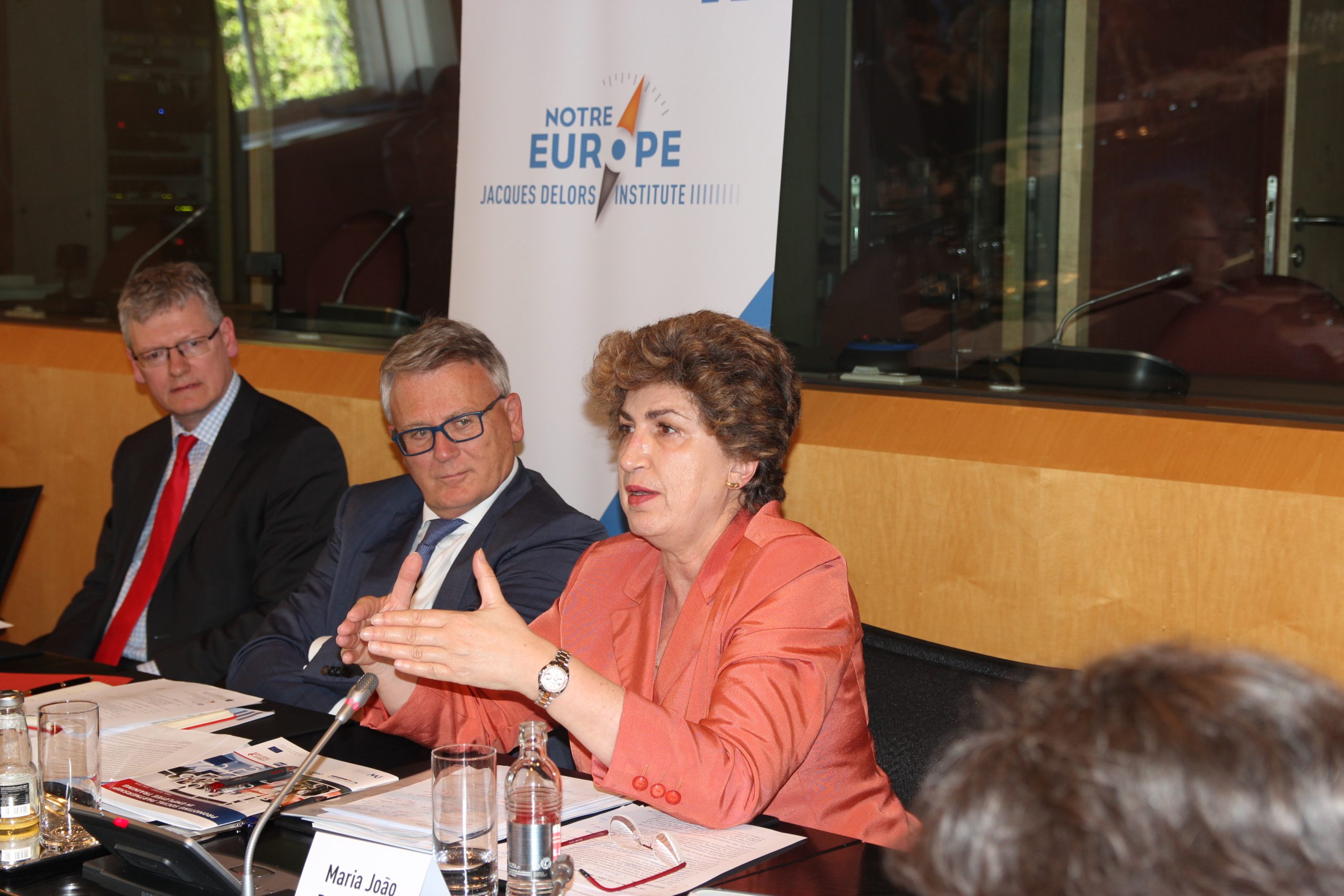
Maria João Rodrigues, member of the European Parliament, rapporteur of the report on the European Pillar of Social Rights
Chair: Sonja Bekker, associate professor at the Tilburg Law School
18:45 > 19:00 Conclusion by Valdis Dombrovskis, European Commission Vice-President for the Euro and Social Dialogue
Seminar on invitation
The reform of the Economic and Monetary Union (EMU) will be at the heart of the European agenda in the coming months. This reflection on the deepening of EMU should not be limited to economic, budgetary or financial stakes. EMU also has a social dimension that needs to be clarified. What social convergence is necessary for the proper functioning of EMU? What are the instruments to put in place or strengthen to achieve this social convergence? How to improve the social governance of EMU? It is during a high-level seminar that the Luxembourg government, in partnership with the Jacques Delors Institute, seeks to answer these questions in order to contribute to the debate on the deepening of EMU.
Programme
15:00 > 15:10 Introduction by Nicolas Schmit, Minister for Labour, Employment and the Social and Solidarity Economy, Luxembourg
15:10 > 15:20 Keynote speech by Luca Visentini, General Secretary of the European Trade Union Confederation
15:20>16:45 Panel 1: What social convergence for the euro area?
Agnès Bénassy-Quéré, professor at the Paris School of Economics
Barbara Kauffmann, Director for Employment and Social Governance at the European Commission
Frank Vandenbroucke, professor at the University of Amsterdam
Chair: Sébastien Maillard, Director of the Jacques Delors Institute
16:45 > 16:55 Speech by Maxime Cerutti, Director of the Social Affairs department at Business Europe
16:55 > 17:10 Coffee Break
17:10 > 17:20 Speech by Kris Peetters, Vice Price Minister of Belgium and Minister for Work, Economic Affairs and Consumer Affairs, responsible for Foreign Trade
17:20 > 18:45 Panel 2: What instruments and governance for social convergence in the euro area?
László Andor, former Commissioner for Employment, Social Affairs and Inclusion
Lucas Guttenberg, Deputy Head of Research at the Jacques Delors Institut – Berlin
Maria João Rodrigues, member of the European Parliament, rapporteur of the report on the European Pillar of Social Rights
Chair: Sonja Bekker, associate professor at the Tilburg Law School
18:45 > 19:00 Conclusion by Valdis Dombrovskis, European Commission Vice-President for the Euro and Social Dialogue
Seminar on invitation
Luxembourg
Luxembourg
SUR LE MÊME THÈME
ON THE SAME THEME
PUBLICATIONS
Making the most of the European Year of Skills
Parents’ leaves in the EU
One step closer to adequate minimum wages in the EU
MÉDIAS
MEDIAS
Learning mobility: making it the norm in the EU
A fairer energy system with energy communities
François Hollande x Enrico Letta : la crise de la social-démocratie européenne
ÉVÉNEMENTS
EVENTS
Académie Notre Europe – “Social Europe” session [FR]
Euroquestions | Will the invasion of Ukraine strengthen or weaken the EU integration process?
My Europe – The European Union, ally or danger for workers? [FR]
The European Union and work: what competences, what debates, what perspectives? [FR]
What place for responsible capitalism in Europe? (FR)
Differentiated Integration and the Future of Europe: Promises, Pitfalls, Pathways
Comment garantir une relance verte et juste ?
Webinar | SURE : a welcomed catalyzer for an European Unemployment Insurance*
Académie Notre Europe n°5 – Social Europe and Budget
Barcelona, 25 October 2019 – Sovereignty, inequalities and social Europe
Ludwigsfelde, 2 October 2019 – Citizen dialogue and Trilateral Experts seminar on Social Europe
Strasbourg, 17th September 2019 – Democracy and the Peace Building process
San Sebastian, 12th September 2019 – The process of the UK withdrawing from the EU
Paris, 5 September 2019 – Global Convergences Forum
Paris, 6 June 2019 – Quelles relations entre la France et les pays de Visegrád ?
Saint-Prix, 24 May 2019 – Discover the European Union
Paris, 21 May 2019 – Europe: which answers to the Digital economy’s social challenges?
Dijon, 17 May 2019 – The European project against populism and the illiberal temptation
Paris, 13 May 2019 – Europe of culture
Argenteuil, 11 mai 2019 — Europe and fraternity
Paris, 6 April 2019 — Social justice in the energy transition in Europe
Paris, 5 April 2019 – European elections: what stakes for disability?
Training on European issues
Bruxelles, 21 February 2019 – Expert Debate on the European Pillar of Social Rights
Paris, 18 December 2018 – Social Europe
Paris, 11 January 2019 – Académie Notre Europe: Social Europe
Paris, 20 November 2018 – How to accompany the low-carbon transition to be fair?
Saint-Maur-des-Fossés, 14 November 2018 – What is Europe doing to protect us? Trade Policy, Social Europe, Environment and Security
Paris, 24 October 2018 – Companies: missions and reasons to be
Dardilly, 10 October 2018 – What future for social Europe?
Paris, 3 October 2018 – Is European solidarity still possible?
Brussels, 3 October 2018 – Europe needs a social pact for the energy transition
Paris, 24 September 2018 – European social dialogue: what future?
Berlin, 19 September 2018 – Making Europe’s Economic Union Work
Bruges, 12 July 2018 – Just a transition or a just transition? Jobs, skills, energy poverty
Paris, 20 June 2018 – Future Europe
Paris, 13 June 2018 – Whither European integration – Addressing EU internal and external challenges
Montreal, 11 June 2018 – Europe at the Crossroads
Geneva, 1st June 2018 – The European Union future: challenges and prospects
Paris, 18 May 2018 – One Vision: Awaken the European spirit
Brussels, 17 May 2018 – Where is spectrum management headed in 2025-35?
Paris, 17 May 2018 – France and the European Pillar of Social Rights
Paris, 9 May 2018 – Europe Day at school
Brussels, 20 April 2018 – White Paper on the Future of Europe
Toulouse, 17 April 2018 – A protective Social Europe : myth or reality?
Tours, 4 April 2018 – Toward a Social and Political Europe?
Angers, 29 March 2018 – From the Treaty of Rome to today
Nicosia, 16 March 2018 – The political landscape of EMU reform
Sofia, 9 March 2018 – The future of the EU budget
Athens, 8 February 2018 – Athens’ days: Greece, paths for hope
Paris, 2 February 2018 – How to deal with the populist phenomenon?
Bruxelles, 25 January 2018 – Academy study trip to Brussels
Champigny-sur-Marne, 23 January 2018 – Social Europe
Aulnay-sous-Bois, 16 December 2017 – Active Citizens Forum
Paris, 8 December 2017 – Academy: Political and Social Europe
Paris, 5 December 2017 – The future of social democracy
Luxembourg, 21 October 2017 – Europe: Changing the economic and social framework
Brussels, 16 October 2017 – “Making the Energy Transition a European Success”
Créteil, 28 September 2017 – Social Europe: utopia or reality?
Paris, 28 September 2017 – What future for a Social Europe?
Brussels, 10 July 2017 – Guaranteeing solidarity in EU Cohesion policy post-2020
Prague, 8 June 2017 – Hamonization of EU social standards
Rome, 20 March 2017 – Completing economic governance and enhancing social cohesion
Brussels, 27 February 2017 – Social Policy in the EU – state of play 2016
Paris, 18 October 2016 – The EU and social investment policies