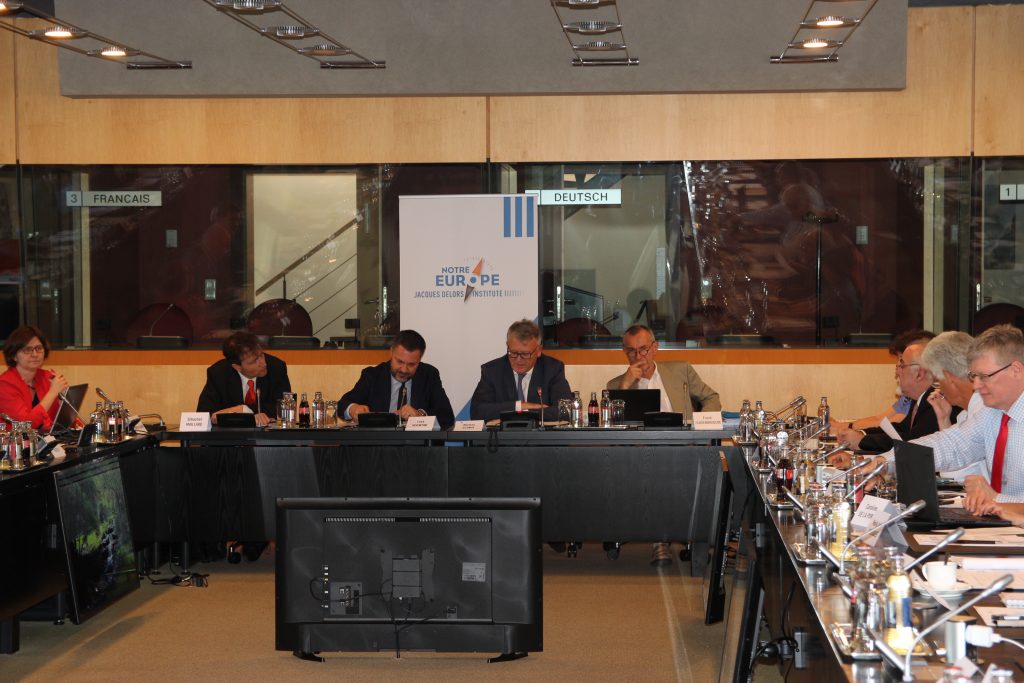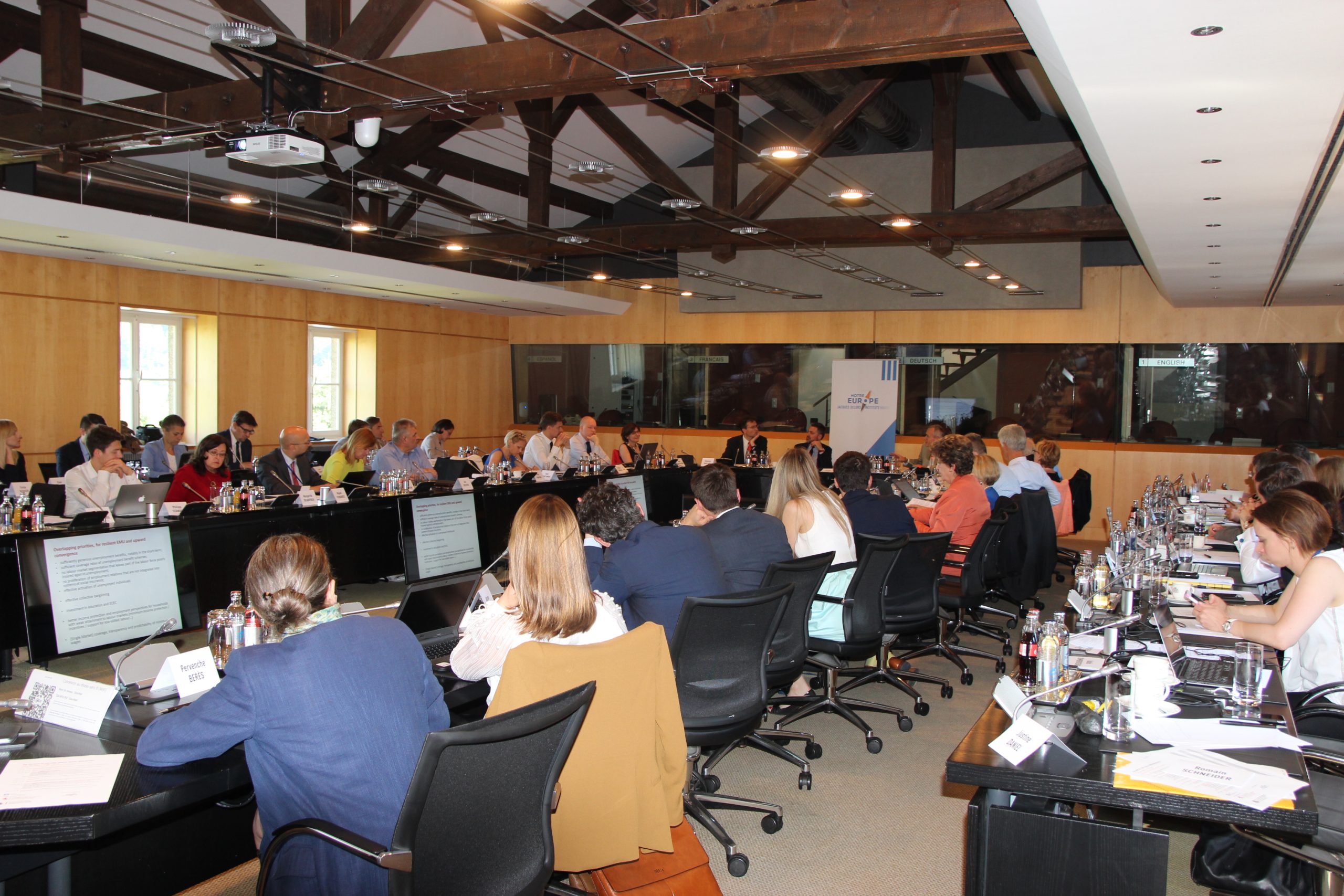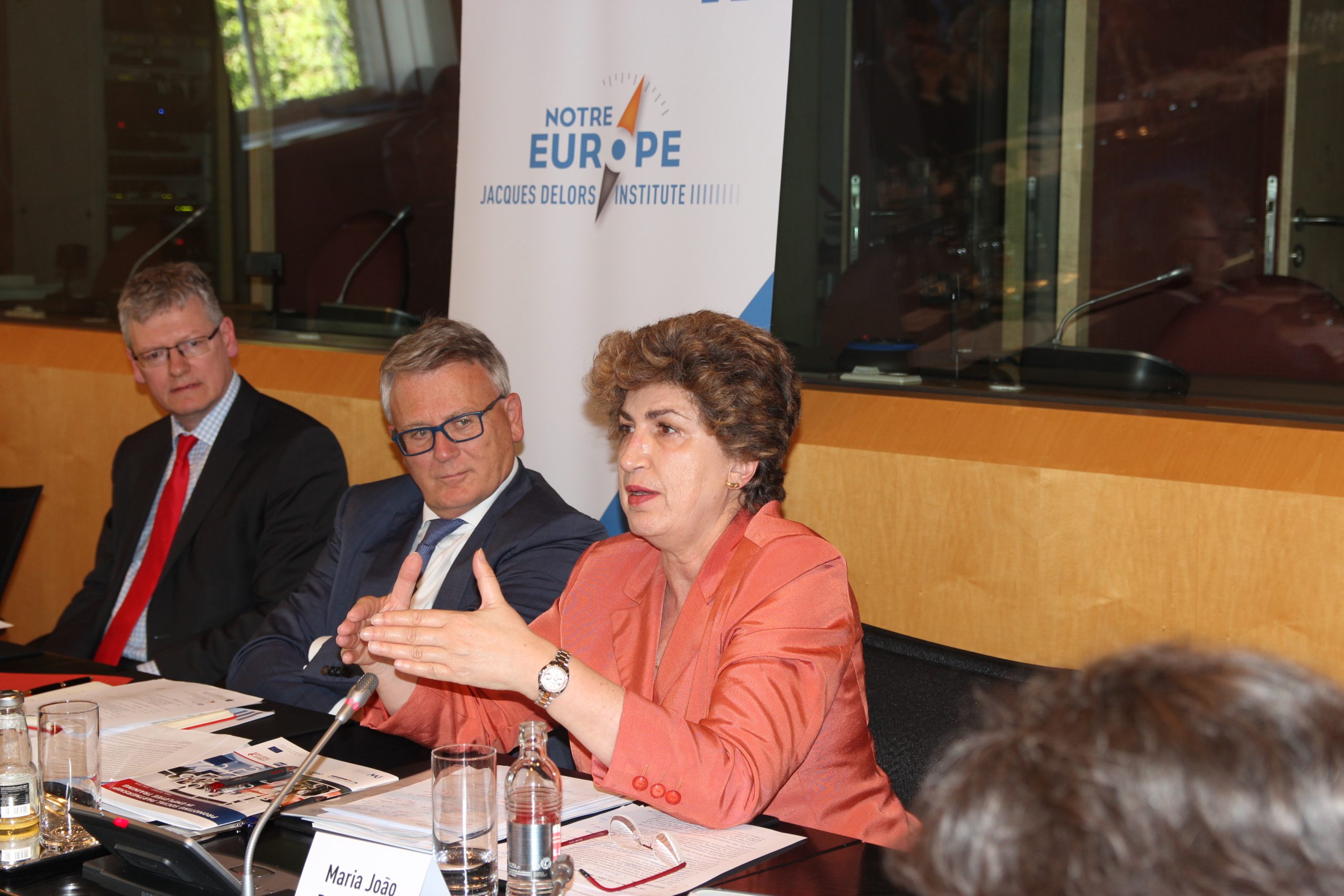
Luxembourg, 20 June 2018 – The reform of the EMU: which social dimension?
The Jacques Delors Institute organizes, in collaboration with the Ministry of Labor, Employment and the Social and Solidarity Economy of Luxembourg and the services of the Deputy Prime Minister and the Ministry of Employment, Economy and Consumers, responsible for foreign trade, a high-level conference on the social dimension of the Economic and Monetary Union and possible avenues for reform to strengthen the European social pillar.
The reform of the Economic and Monetary Union (EMU) will be at the heart of the European agenda in the coming months. This reflection on the deepening of EMU should not be limited to economic, budgetary or financial stakes. EMU also has a social dimension that needs to be clarified. What social convergence is necessary for the proper functioning of EMU? What are the instruments to put in place or strengthen to achieve this social convergence? How to improve the social governance of EMU? It is during a high-level seminar that the Luxembourg government, in partnership with the Jacques Delors Institute, seeks to answer these questions in order to contribute to the debate on the deepening of EMU.
Programme
15:00 > 15:10 Introduction by Nicolas Schmit, Minister for Labour, Employment and the Social and Solidarity Economy, Luxembourg
15:10 > 15:20 Keynote speech by Luca Visentini, General Secretary of the European Trade Union Confederation
15:20>16:45 Panel 1: What social convergence for the euro area?
Agnès Bénassy-Quéré, professor at the Paris School of Economics
Barbara Kauffmann, Director for Employment and Social Governance at the European Commission
Frank Vandenbroucke, professor at the University of Amsterdam
Chair: Sébastien Maillard, Director of the Jacques Delors Institute
16:45 > 16:55 Speech by Maxime Cerutti, Director of the Social Affairs department at Business Europe
16:55 > 17:10 Coffee Break
17:10 > 17:20 Speech by Kris Peetters, Vice Price Minister of Belgium and Minister for Work, Economic Affairs and Consumer Affairs, responsible for Foreign Trade
17:20 > 18:45 Panel 2: What instruments and governance for social convergence in the euro area?
László Andor, former Commissioner for Employment, Social Affairs and Inclusion
Lucas Guttenberg, Deputy Head of Research at the Jacques Delors Institut – Berlin
Maria João Rodrigues, member of the European Parliament, rapporteur of the report on the European Pillar of Social Rights
Chair: Sonja Bekker, associate professor at the Tilburg Law School
18:45 > 19:00 Conclusion by Valdis Dombrovskis, European Commission Vice-President for the Euro and Social Dialogue
Seminar on invitation
The reform of the Economic and Monetary Union (EMU) will be at the heart of the European agenda in the coming months. This reflection on the deepening of EMU should not be limited to economic, budgetary or financial stakes. EMU also has a social dimension that needs to be clarified. What social convergence is necessary for the proper functioning of EMU? What are the instruments to put in place or strengthen to achieve this social convergence? How to improve the social governance of EMU? It is during a high-level seminar that the Luxembourg government, in partnership with the Jacques Delors Institute, seeks to answer these questions in order to contribute to the debate on the deepening of EMU.
Programme
15:00 > 15:10 Introduction by Nicolas Schmit, Minister for Labour, Employment and the Social and Solidarity Economy, Luxembourg
15:10 > 15:20 Keynote speech by Luca Visentini, General Secretary of the European Trade Union Confederation
15:20>16:45 Panel 1: What social convergence for the euro area?
Agnès Bénassy-Quéré, professor at the Paris School of Economics
Barbara Kauffmann, Director for Employment and Social Governance at the European Commission
Frank Vandenbroucke, professor at the University of Amsterdam
Chair: Sébastien Maillard, Director of the Jacques Delors Institute
16:45 > 16:55 Speech by Maxime Cerutti, Director of the Social Affairs department at Business Europe
16:55 > 17:10 Coffee Break
17:10 > 17:20 Speech by Kris Peetters, Vice Price Minister of Belgium and Minister for Work, Economic Affairs and Consumer Affairs, responsible for Foreign Trade
17:20 > 18:45 Panel 2: What instruments and governance for social convergence in the euro area?
László Andor, former Commissioner for Employment, Social Affairs and Inclusion
Lucas Guttenberg, Deputy Head of Research at the Jacques Delors Institut – Berlin
Maria João Rodrigues, member of the European Parliament, rapporteur of the report on the European Pillar of Social Rights
Chair: Sonja Bekker, associate professor at the Tilburg Law School
18:45 > 19:00 Conclusion by Valdis Dombrovskis, European Commission Vice-President for the Euro and Social Dialogue
Seminar on invitation
Luxembourg
Luxembourg
SUR LE MÊME THÈME
ON THE SAME THEME
PUBLICATIONS
Making the most of the European Year of Skills
Parents’ leaves in the EU
One step closer to adequate minimum wages in the EU
Welcoming Ukrainian refugees in the EU
IS IT TIME FOR A EUROPEAN UNEMPLOYMENT (RE)INSURANCE?
CONTINUING EDUCATION, ACCORDING TO JACQUES DELORS, THE CATALYST OF A CHANGING SOCIETY
Addressing the climate and social emergencies with minimum energy performance standards
A Social Climate Fund for a fair energy transition
The Euro as seen by citizens who do not yet have it
Toward a European homelessness policy
The Porto Social Summit: turning principles into actions
Europe needs a political strategy to end energy poverty
Towards an individual right to adult learning for all europeans
A move towards adequate minimum wages in the European Union?
SURE or the EU to aid European workers
Joining forces to ensure a green and social recovery
Building a clean mobility system in times of COVID-19
Harmful tax competition
Combating poverty in Europe
Overcoming covid-19 crises
by building a clean and resilient Europe
Making the Green Deal a European success
Coalition, narrative, flagships
Objective 2024: better living and working conditions for all europeans
Just energy transition: a reality test in Europe’s coal regions
Making the European energy transition socially sustainable
Achieving a european minimum wage? Clarifications on the issue
The reform of the EMU: what social dimension?
European unemployment insurance: what citizens really think
Towards a European Transition Support Fund
Social Europe: From Slogan to Reality
Es ist Zeit
Economic and Monetary Union: past and present
The future of the Eurozone: cross-perspective from France and Germany
Family allowances: their amount should not depend on the country where the child lives
No Escape from Politics: four tests for a successful fiscal instrument in the Euro area
What is our Ambition for the European Labour Authority?
Reinforcing the EU Budget with a fossil-fuel contribution
Looking for the silver bullet – A guide to the ESM debate
Posted Workers: How to Ensure a Fair Mobility?
Juncker’s Last Hurrah
Making the Energy Transition a European Success
Extending Erasmus: a new impetus for youth mobility in Europe
Making Social Europe a Reality for European Citizens
Narrating Social Europe: the Search for progress in the “Age of Delors”
For an ambitious Europe
Automatic stabilizers for the Euro area and the European social model
Is there such a thing as “Social Europe”?
EU Economic Policy Coordination
Automatic stabilisers for the euro area: what is on the table?
Social benefits and cross-border mobility
Access to social benefits for EU mobile citizens: “tourism” or myth?
The growing intergenerational divide in Europe – What role for the welfare state?
A new start for Social Europe
Governing the welfare state and beyond – Solutions for a complex and uncertain future
Germany and the stability of the EMU
“Shared sovereignty for monitoring borders already shared”
Social inequalities in Europe: the challenge of convergence and cohesion
Redesigning European welfare states – Time for action
What would a European finance minister do? A proposal
The Future of the Welfare State : visions for reform
After the Greek psychodrama, what improvements for the EMU?
After the Greek deal: why it is urgent to complete EMU
The EU and Greece: exiting “IMF – Europe” rather than the Euro
Growth and euro area stability: for a deepened single market for services
Regional integration and social cohesion: the European experience
On asylum and the euro: displaying solidarity is in our own interest
Improving EMU: Our recommendations for the debate on the five presidents report
Repair and prepare: Strengthening Europe’s economies after the crisis
European social dialogue: 30 years of experience and progress, what future?
Employment, mobility and social investment: three key issues for post-crisis social Europe
What political and institutional evolutions for the EU and the EMU?
Promoting structural reforms in the euro area: what for and how?
20 years “core Europe”
Reforming Europe’s governance
Adjustment programmes in the euro area: mission accomplished?
Who calls the shots in the euro area? “Brussels” or the member states?
25 years after the Delors Report: what lessons for economic and monetary union?
The “stupidity pact” is not stable
The unhappy state of the Union
Posted workers in the EU: state of play and regulatory evolution
What kind of Social Europe after the crisis?
Completing the Economic and Monetary Union
European elections: full steam ahead!
Which financial instrument to facilitate structural reforms in the euro area?
Deepening the EMU: How to maintain and develop the European social model?
Endowing the EMU with a Social Dimension
Towards a Euro Union
An Inter-Parliamentary Conference for the EMU
Social Competition in the EU: Myths and Realities
What are the economic and social issues of the 2014 European elections?
Blueprint for a Cyclical Shock Insurance in the euro area
A social dimension for the EMU: why and how?
The way out of the Cyprus economic crisis
Beyond the Troika: which divides and faces for the EU?
Eurozone and democracy(ies) : a misleading debate
Towards a more social Europe?
The Baltic states in the EU: yesterday, today and tomorrow
Rethinking the EMU and making Greater Europe positive again
Fear not, we will get there!
Averting two pitfalls: illusion and inertia
Europe between renewal and decline
Leading Europe from the front
Rebuilding Greater Europe
Social Competition in the EU: Myths and Realities
The parliaments of the EU and the governance of the EMU
European budget 2014-2020: seven years of bad luck?
What political union for Europe?
Making one size fit all. Designing a cyclical adjustment insurance fund for the eurozone
Reflections on Political Union
What balance between austerity and growth in the euro zone?
Reform proposals for the euro zone
A new path for growth and solidarity
The euro zone, core of a political union
“Democracy in Europe”
Eurozone budget: 3 functions, 3 instruments
A European statute for mutuals?
The interim report on the EMU is encouraging
Which Institutions for the Euro Area?
EMU: long-term matters are urgent matters
Fire-fighters, Policemen and Architects for European Integration