
Paris, 6 June 2018 – What territorial cohesion to build in Europe?
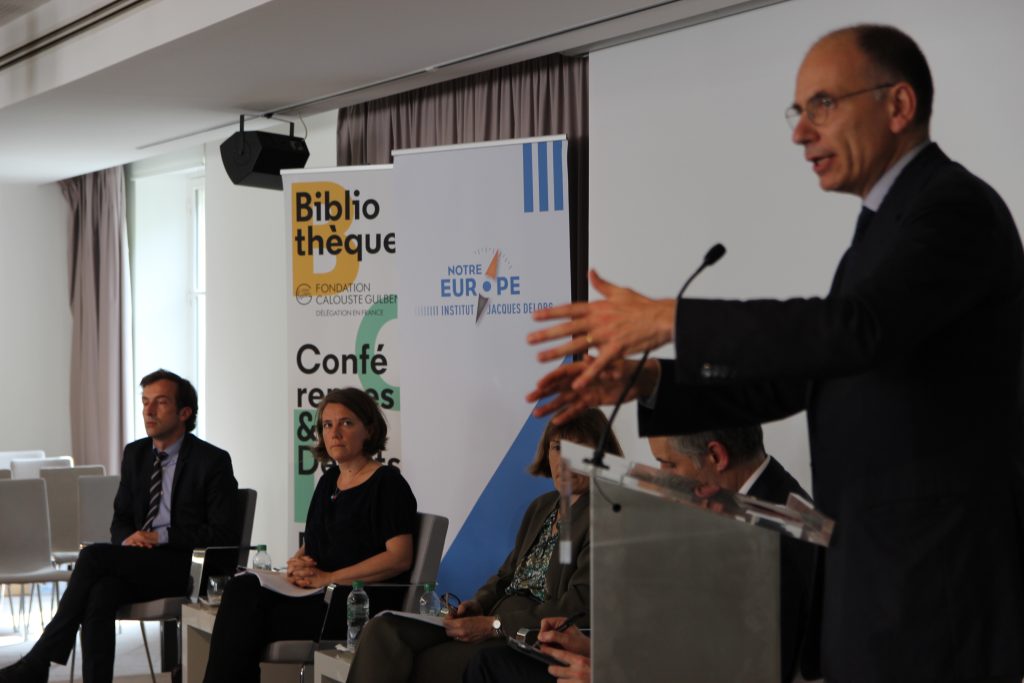
The Jacques Delors Institute organises, in collaboration with the Calouste Gulbenkian Foundation, a conference on the European cohesion policy, currently discussed at the European level as the next Multiannual Financial Framework (MFF) is negotiated.
The results of the recent elections in Europe, particularly in France, have clearly drawn cleavage lines, where criticism or rejection of the European project is anchored in territories relegated or perceived as such. Conversely, the pro-European electorate is most often found in privileged, urban and connected areas. At a time when the Commission is proposing a new cohesion policy in the framework of the future post-2020 European budget, this conference-debate aims to deepen the understanding of these territorial divides and the best ways to remedy them.
Programme
Introduction
Stéphanie Von Euw, Vice-President of Ile-de-France Regional Council, in charge of European affairs.
Speakers
Sophie Barbier, Head of “Europe” unit, Caisse des dépôts et consignations (CDC)
Peter Berkowitz, Head of Unit “Sustainable development” at the Directorate-General REGIO, European Commission
Hugo Bevort, Director in charge of territorial strategies, Commissioner General for Territorial Equality (Commissariat général à l’égalité des territoires)
Moderator : Marjorie Jouen, Adviser. Employment policy, Rural development and Structural and Cohesion Policies, Rural Development Policy
Concluding Remarks
Enrico Letta, President of the Jacques Delors Institute
For more information on this conference, you can consult the programme, enclosed to this announcement. Please note that the registration is compuslory : to register, please fill the form.
We also invite you to read the last policy paper published by the Jacques Delors Institut on the European Cohesion policy : “For a regional solidaruty policy after 2020” (30/03/2018), written by Marjorie Jouen.
The results of the recent elections in Europe, particularly in France, have clearly drawn cleavage lines, where criticism or rejection of the European project is anchored in territories relegated or perceived as such. Conversely, the pro-European electorate is most often found in privileged, urban and connected areas. At a time when the Commission is proposing a new cohesion policy in the framework of the future post-2020 European budget, this conference-debate aims to deepen the understanding of these territorial divides and the best ways to remedy them.
Programme
Introduction
Stéphanie Von Euw, Vice-President of Ile-de-France Regional Council, in charge of European affairs.
Speakers
Sophie Barbier, Head of “Europe” unit, Caisse des dépôts et consignations (CDC)
Peter Berkowitz, Head of Unit “Sustainable development” at the Directorate-General REGIO, European Commission
Hugo Bevort, Director in charge of territorial strategies, Commissioner General for Territorial Equality (Commissariat général à l’égalité des territoires)
Moderator : Marjorie Jouen, Adviser. Employment policy, Rural development and Structural and Cohesion Policies, Rural Development Policy
Concluding Remarks
Enrico Letta, President of the Jacques Delors Institute
For more information on this conference, you can consult the programme, enclosed to this announcement. Please note that the registration is compuslory : to register, please fill the form.
We also invite you to read the last policy paper published by the Jacques Delors Institut on the European Cohesion policy : “For a regional solidaruty policy after 2020” (30/03/2018), written by Marjorie Jouen.
Paris
SUR LE MÊME THÈME
ON THE SAME THEME
PUBLICATIONS
How stringent would the new Stability and Growth Pact be? And for who?
The tools for protecting the EU budget from breaches of the rule of law
Macro-economic impact of the EU Recovery Funds
MÉDIAS
MEDIAS
War in Ukraine Bolstered EU Solidarity—Will it Last?
La solidarité financière, solution fragile de l’UE à la flambée de l’énergie
« Poutine utilise le gaz comme une arme de chantage énergétique pour diviser les Européens »
ÉVÉNEMENTS
EVENTS
40 YEARS AFTER THE STATE OF SIEGE IN POLAND: SOLIDARITY, THEN AND NOW. 1981-2021, WHAT HAPPENED TO OUR HOPES? [FR]
Legitimacy Crisis and Autocratic Legalism: The case of the EU Budget
Euroquestions | European Recovery : from planning to implementation
Euroquestion | Quelle gestion de l’endettement public à la suite du Covid ?
Euroquestions | The ongoing negotiations on the next Multiannual Financial Framework (MFF) and the European Recovery Plan: the state of play [Traduction simultanée vers le français disponible]
Wébinaire | Le Parlement européen, acteur de la réponse à la crise du Covid-19
Day of Progressive Economic Policy
Académie n°7 – L’Europe économique
Webinar | SURE : a welcomed catalyzer for an European Unemployment Insurance*
Webinar | The day after the Eurogroup Meeting : outcomes & opportunities
Académie Notre Europe n°5 – Social Europe and Budget
EU Budget 2021-27 : Challenges and opportunities
Florence, 17 October 2019 – The MFF and EU Policie 2021-2027
Brussels, 16th October 2019 – Three solutions to finance the Green Deal
Paris, 12 April 2019 – Session no.6 of the Académie Notre Europe: economic and monetary Union
Brussels, 22 February 2019 – Post-Brexit EU budget: will it meet the challenge of the 21st century?
Landerneau, 24 January 2019 — Building a Europe of solidarity
11 octobre 2018 – La montée des banques promotionnelles en Europe contemporaine: potentiels et pièges
Brussels, 9 October 2018 – What can NPBIs bring to the table for territorial investment?
Strasbourg, 3 October 2018 – Presentation of the report “Making better use of public funding: The role of NPBIs in the next EU budget”
Paris, 18 September 2018 – Towards a Juncker Plan closer to the territories?
Paris, 12 June 2018 – Hearing by the Special Rapporteur on Budget for European affairs of the French National Assembly
Brussels, 6 June 2018 – Cohesion Policy and the new MFF
Paris, 28 May 2018 – Budget meetings: the new EU financial framework
Budapest, 24 May 2018 – The Money Trail to Europe’s Future: the Multi-Annual Financial Framework and the EU’s priorities post-2020
Nicosia, 16 March 2018 – The political landscape of EMU reform
Sofia, 9 March 2018 – The future of the EU budget
Brussels, 22 November 2017 – The future of the European budget
Strasbourg, 8 November 2017 – International Urban Commitments vs. Local Implementations
Brussels, 25 September 2017 – Conference on the Future of EU Finances
Paris, 21 July 2017 – The future of the Eurozone and the Multiannual Financial Framework
Brussels, 10 July 2017 – Guaranteeing solidarity in EU Cohesion policy post-2020
Brussels, 9 June 2017 – A budget fit for purpose. Performance, conditionalities and EU added value
Brussels, 31 may 2017 “The role of structural funds in EU economic governance”
Rome, 20 March 2017 – Completing economic governance and enhancing social cohesion
Koszeg, 27 February 2017 – Does EU has still a territorial development policy?
Saint-Jacut-de-la-Mer, 28 January 2017 – Migrants, neither angels nor demons, hospitality at stake
The Hague, 6 December 2016 – How to improve the EU budget?
Vienna, 24 November – Fiscal union – Toward a treasury for the euro area?


