Other document
“Brexit”: a British drama, a challenge for the EU
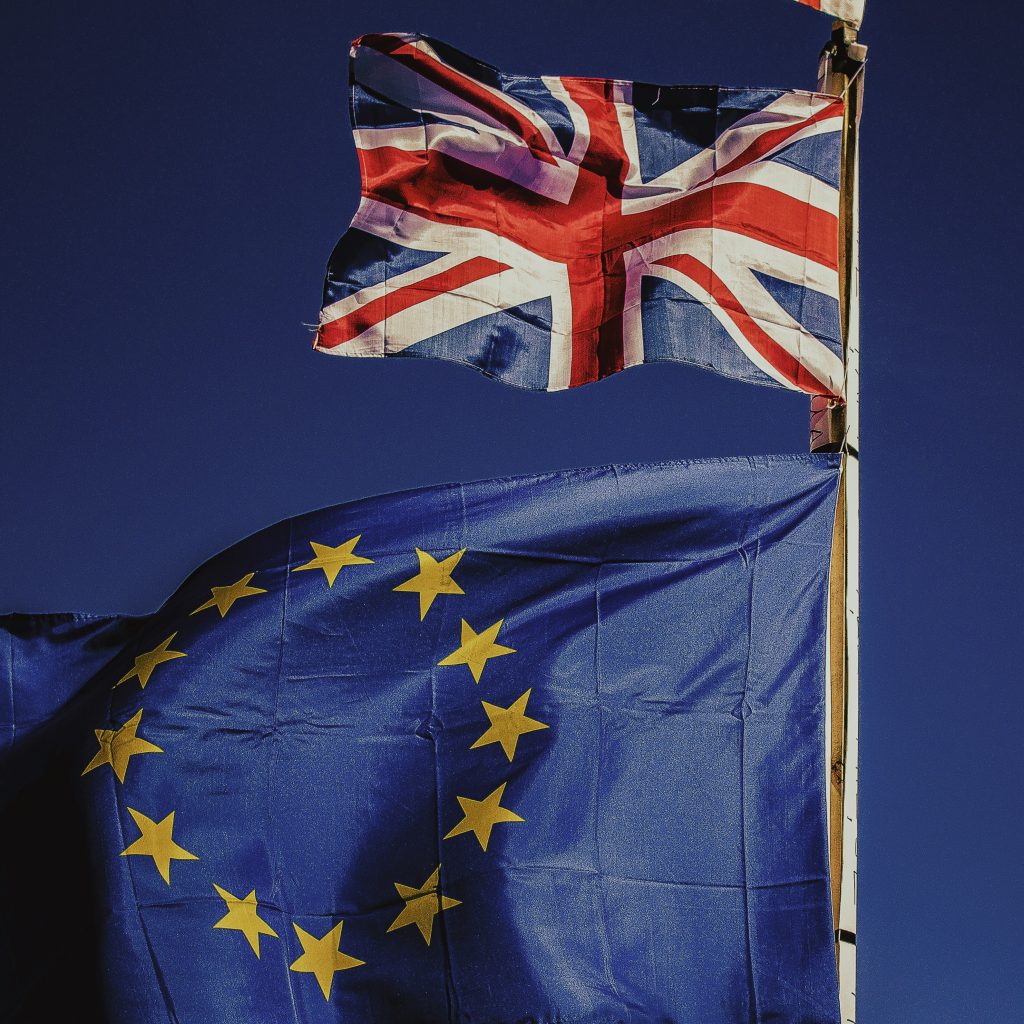
The British people’s decisive vote in favour of leaving the EU has triggered a myriad of different reactions which we need to put into focus. Members of the Board of directors of the Jacques Delors Institute take a stand in this Viewpoint.
| 22/07/2016
The Jacques Delors Institute takes a stand in this Viewpoint and focuses on 3 main issues:
1. The “Brexit” is primarily a British drama: render unto Shakespeare that which is Shakespeare’s
2. The “Brexit” is a national democratic choice, thus a specific case
3. The “Brexit” must encourage emphasis on why we are stronger together
The EU does not only need firemen, summoned by the “Brexit” to fight the blaze of a new crisis: its next step forward requires more than ever the mobilisation of architects and of prophets capable of restoring a compass and a soul to this unparalleled Union, forged in postwar grief but still making perfect sense in a globalised world for young people and future generations.
This Viewpoint is also available in href=”https://www.institutdelors.eu/01123385-Le-Brexit-drame-britannique-defi-europeen.html” target=””>French and href=”https://www.institutdelors.eu/media/postbrexit-vr-jdib-juni16.pdf?pdf=ok” target=””>German.
A shorter version was already published in Euractiv.com, HuffingtonPost.de (Germany), Le Figaro (France), La Repubblica (Italy), To Vima (Greece), La Vanguardia (Spain).
SUR LE MÊME THÈME
ON THE SAME THEME
PUBLICATIONS
The legal case against Hungary’s anti-LGBTIQ+ law
Praise for representative democracy
To what extent are European values universal?
After Brexit, euro-denominated derivatives transactions should leave the City
European values. A debate to be clarified, a struggle to be fought
Is Scotland really on the road to independence ?
European Union governance in response to crises
History of a breakdown:Fidesz’s departure from the EPP group at the European Parliament
What is left of the “Visegrád Group”?
Using the “Barnier Method”
to deal with China
Brexit: Breaking the laws of gravity?
Framing the state aid debate for the post-covid era the Brexit challenge
Abolition of the death penalty: a european exception to be promoted
The new political economy of Brexit
Is Brexit a game changer for EU external differentiated integration?
Brexit and External Differentiation in Single Market Access
Representation and participation
Brexit : the worst is yet to come!
Brexit has not won over european opinions, quite the contrary
Will Brexit turn the European Parliament upside-down ?
Le choix des gouvernants de l’Union,
pour un équilibre entre démocratie et diplocratie
Trade war :
bad timing for Brexit ‘take back control’
Brexiteers success, Brexit failures
‘No deal’ Brexit and the EU budget:
beware the risk for EU unity
Europeans face the risk of democratic regression: what can be done
Brexit: the Knowns Amongst the Unknowns. For the UK, the EU and Third Countries, notably South Korea
Check Against Delivery: “Brexit, Ireland and europe at 27”
Appartenance assumée, adhésion réservée : évolution des opinions publiques sur l’Union européenne – de la crise à nos jours
“Illiberal Democracy” or “Majoritarian Authoritarianism”? Contribution to the analysis of populisms in Europe
Le troisième acte de l’histoire européenne
The revenge of the nation: political passions in contemporary Poland
Should there be another Brexit-referendum? Risks and opportunities
Between amputation and strengthening: what Brexit?
What impact would a No Deal Brexit have on European Parliament elections?
A Guide to Brexit and Data Flows
Brexit: potential scenarios amid turbulent waters
EU’s multi-level system: Strengthening parliamentary voices
Who Will Cope with the Post-Brexit Resentment?
Invigorating European Democracy
Transition: the Hitchhiker’s Guide to the Brexit Galaxy
Towards a more democratic European Union
The Rule of Law under Threat: What Can Europe Do?
Ireland on the rocky road to Brexit
Understanding the “Brexit Divorce Bill”
Democratic Crises in the EU: Towards “New Frontiers”
The possible impact of Brexit on the EU budget and CAP funding
United in diversity: Anthems and flags of the European Union
Faces on Divides: Citizen Debates in Le Mans and Toulouse
German Election: Last Vote to Make Europe
Brexit and the Area of Freedom, Security and Justice
Europe, Germany, France: Evolution of Public Opinions
European public opinion and the EU following the peak of the migration crisis
European Democracy: What Are the Next Challenges
Enrico Letta about the main issues of the June 2017 EU Council
Extending Erasmus: a new impetus for youth mobility in Europe
French and Europeans: Stronger Together!
Defending Europe to Defend Real Sovereignty
Social Networks and Populism in the EU : Comparative Study
National Referendums on EU Issues: from Clarification to Frustration
The Awakening
Living Together Facing Fears: the French Political Dilemma
Faces on divides: mid-term Czech MEPs’ votes
Faces on divides: mid-term Greek MEPs’ votes
Future of the Capital Markets Union after Brexit
Brexit: Negotiation Phases and Scenarios of a Drama in Three Acts
Brexit and the EU budget: threat or opportunity?
Faces on divides: mid-term French MEPs’ votes
Faces on divides : MEPs votes Mid-term assessment
Europe in search of Europeans: The road of identity and myth
Yes, we are European!
EU external action and Brexit: relaunch and reconnect
For an ambitious Europe
Building the future of the EU: our generation’s duty
The revival of the EU at 27
France’s European vision
The Political Future of the European Union
The Political Future of the European Union by Manuel Valls
The Political Future of the European Union by Jean-Claude Juncker
Brexit: between British Europhobia and continental Euroscepticisms
Repair and Prepare: Growth and the Euro after Brexit
Stronger together – even at 27!
Enrico Letta answered your questions on the state of the European Union
Joschka Fischer – “Europe after the British referendum”
Managing a successful UK-EU divorce, arousing the desire for Union
The EU and referenda: three denials of democracy
The EU, despite everything? European public opinion in the face of crisis (2005–2015)
Pope Francis and the EU: give sense to the European project again?
Europe must rise to the challenges
The EU-UK Agreement: much ado about (almost) nothing?
“Shared sovereignty for monitoring borders already shared”
Cameron: taking a gamble on Europe
How to communicate with the EU? The opinion of Halo (Tallinn)
How to communicate with the EU? The opinion of Julia (Stockholm)
What do citizens think the future challenges of the EU are?
How to communicate with the EU? The opinion of Neli (Sofia)
How to communicate with the EU? The opinion of Kyrone (Valletta)
How to communicate with the EU? The opinion of Richard (Amsterdam)
How would citizens like to communicate with the European Union?
How to communicate with the EU? The opinion of Giuliana (Bucharest)
How does the European Union communicate with citizens?
How to communicate with the EU? The opinion of Andreas (Athens)
How do citizens see the European Union?
How to communicate with the EU? The opinion of Paul (Dublin)
How to communicate with the EU? The opinion of Eileen (London)
How to communicate with the EU? The opinion of Stefano (Milan)
How to communicate with the EU? The opinion of Michel (Lille)
How to communicate with the EU? The opinion of Lucía (Madrid)
What language(s) for the European Union?
European citizens in Brussels: what messages?
Citizens facing “Brussels’ Europe”
The involvement of EU citizens in the European project
Rural life in the 21st century, a beacon of hope for Europe
What political lessons should we learn from the Troika experience?
Redesigning the European project to improve employment and democracy?
What role should outermost regions in the European Union have?
European Union, democracy and euro
What role for the EU concerning employment in globalisation?
European Union, employment and democracy
Inventing the European policies of tomorrow