
Greenland: Three Scenarios for Europe Facing a Predatory Ally
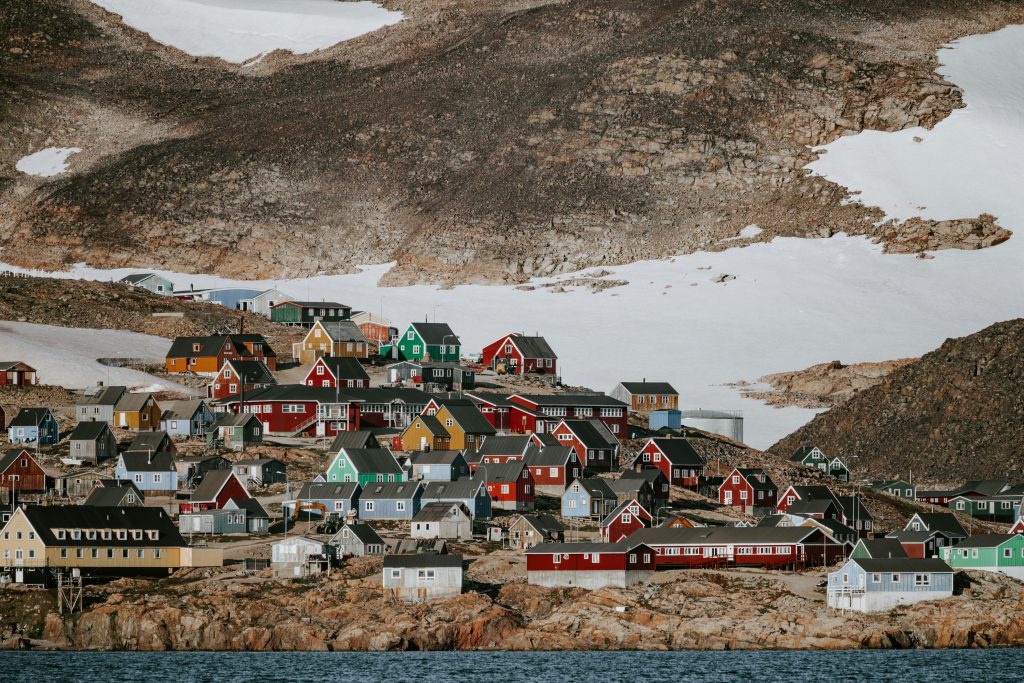
January 2026 marks a breaking point. What was perceived in 2019 as a real estate whim (quickly labeled “absurd” in Copenhagen) has become, under the second Trump administration, a coercive demand1. President Trump’s recent interview—reiterating his desire to obtain full ownership, dismissing the idea of a simple security agreement, and suggesting that sacrificing NATO could be an acceptable “choice” to secure Greenland—transforms the Arctic into a test of European sovereignty2.
The unease in European capitals—caught between stupor, denial, and the fear of American disengagement in Ukraine—could lead to de facto vassalization.
This paper explores three response scenarios, from inaction to preemptive deterrence, and examines their political and military costs for the European Union and the Alliance.
The cold hard fact: Washington threatens an ally with annexation and accepts the Price
Since early January 2026, the Trump administration has hardened its rhetoric, moving it out of the “transactional” register and into the realm of sovereignty, and therefore coercion. The White House explicitly asserts that “all options” are on the table and that the use of force is “always an option” available to the Commander-in-Chief3.
In an interview with the New York Times, Trump insists that a “lease” or a “treaty” is not worth ownership, which he claims is “psychologically” necessary; asked about the “Greenland or NATO” dilemma, he replies that “that may be a choice”4.
While Trump does not do everything he says, he telegraphs everything he does. Trump is certainly interested in Greenland’s subsoil resources (which are nonetheless costly to exploit). But that is not what he is emphasizing. Listening to him, now repeatedly, his motivation seems more territorial–that of a real estate tycoon looking to expand his holdings.
It is also clear that the “Arctic security” argument functions as a rationalization. The United States already possesses structural military leverage in Greenland: Pituffik (formerly Thule) notably hosts the Upgraded Early Warning Radar (ex-BMEWS), operated by the US Space Force, a key element of advanced missile/attack warning. Furthermore, the bilateral legal framework (the 1951 defense agreement) and its update (Igaliku, 2004) already offer possibilities for posture adaptation without a transfer of sovereignty5.
In other words: if the objective were merely “more defense,” the cooperative path already exists. This is precisely what makes the claim for ownership politically explosive in Copenhagen, in Nuuk, and among certain Republicans6.
Marco Rubio is attempting to contain European anxiety by referring to future discussions with the Danes and Greenlanders, while being careful not to explicitly rule out the military option7. However, in this type of crisis, the classic mistake would be to treat Donald Trump’s consistent remarks as media noise or a bluff. We know what he wants. We must take him seriously and try to stop him from achieving it.
Three plausible scenarios (and their implications)
Faced with this unprecedented pressure, which explicitly does not rule out the military dimension, three scenarios emerge, each carrying major stakes.
Scenario 1 – Europe stalls, Trump meets no obstacles: an “Arctic Munich”
This is the scenario of denial. Paralyzed by the fear of seeing Washington cut off the lifeline to Kyiv, Europeans (France and Germany in the lead) choose verbal de-escalation and inaction on the ground. Denmark, isolated, is subjected to unbearable bilateral pressure. The United States proceeds with an administrative and security takeover of Greenland—a de facto annexation (via ultimatum, extorted “agreement,” or show of force).
The consequence goes beyond Greenland: Europe is vassalized. The world concludes that the Union is now in a position similar to the Warsaw Pact countries facing the USSR: a sovereignty limited by the interests of the “Big Brother.”
The notion of “strategic autonomy” collapses. The constructs of “European defense” (capacity for action, the “Strategic Compass,” and other declarations) appear retrospectively as mere illusions, incapable of resulting in a reaction even in the face of territorial dispossession. Retaliation may occur: closures of American bases in Europe, or a hardening of European policies against American tech actors. But pulling Europe out of the rut after having been the target of a territorial annexation without being capable of defending itself will be highly uncertain. As President Macron highlighted, we would be entering “another world.”
As for NATO, if an ally can threaten the territorial integrity of another without a structured reaction, the Alliance becomes mere window dressing.
The Ukraine-for-Greenland bargaining chip reveals itself to be a trap: yielding to territorial blackmail validates the method. Nothing guarantees that this sacrifice saves Ukraine. On the contrary, the displayed weakness would encourage Trump to make other transactions with Moscow.
Scenario 2 – A preventive, discreet, multilateral defensive reinforcement: a “Line of Deterrence”
Considering that weakness invites aggression, a coalition of the willing (France, the UK, Scandinavian countries, Germany) decides to back Denmark before any American action. A symbolic but credible force is deployed preventively to Greenland: a few frigates, some aerial assets, and light units positioned on critical infrastructure.
The idea is not to confront the United States militarily, but to make any move to action politically prohibitive. A European deployment, even limited, changes the nature of the narrative: forcing Trump to give the unthinkable order to fire on allies provides arguments to reluctant Republican officials and to Congress, in a context where War Powers-type resolutions are already being discussed to restrict the use of force8.
This is the most rational option if the goal is to deter without provoking: preventing a “frictionless” takeover. The diplomatic narrative must be calibrated, without anti-American posturing: these deployments aim to strengthen the defense of Greenland and NATO’s Northern flank against Arctic risks and the Russian and Chinese threats invoked by Washington.
This framing tracks with the joint communiqué of January 6 (France, Germany, Italy, Poland, Spain, the UK, Denmark): Arctic security as a shared priority, sovereignty, and inviolable borders9. But it makes the signal operational.
Two practical difficulties arise: Arctic logistics (projection, support, communications) and a possible partial dependence on strategic transport assets that we do not possess–which imposes civil/military preparation, and ideally maximal British and Scandinavian support.
This scenario risks presidential anger from America, potentially leading to retaliation (trade, digital, Ukraine).This is the price of credibility: any deterrence implies a risk of political escalation.
Scenario 3 — Effective confrontation, tactical humiliation, maximal political cost for Washington: a “Suez Moment”
Following the preventive deployment (Scenario 2), Trump decides to force his way through regardless. American forces, superior in numbers and technology, encircle and neutralize the European arrangements, even without a shot fired (blockade, cyber, informational saturation, “gray zone” incidents, maritime encirclement), and force a “friendly evacuation.”
Europe loses militarily, but the United States pays an exorbitant political cost. The image of America annexing a NATO ally destroys its reputation and triggers a domestic crisis (Congress, public opinion, institutional Republicans). NATO as we know it ceases to exist. This electroshock accelerates the integration of European defense, decoupled from the USA by absolute necessity.
What to do: a European strategy in two stages (political and military)
Scenario 1 is the most dangerous in the long term. Accepting the amputation of European territory in exchange for an uncertain promise regarding Ukraine would sign the death warrant of political Europe. Between Scenarios 1 and 3, number 3 is preferable.
Scenario 2 (preventive deterrence) appears as the only rational option to attempt to alter the White House’s cost/benefit calculation. Trump seeks easy victories (low-hanging fruit). The physical presence of Europeans transforms the appropriation of Greenland into a major crisis.
Stage A — Raise the American political cost, immediately.
This is the priority axis because it exploits real points of friction: critical Republican officials, debates on War Powers, and NATO unease in Congress10, A coordinated and public offensive is needed: visits by European elected officials to Washington, hearings, op-eds, relays in American media, and mobilization of strategic communities (former military, think tanks). The goal is not to convince Trump, but to make the internal cost prohibitive. This is the most “asymmetric” lever for Europe: raising the domestic political cost where Trump is vulnerable.
Stage B — Make deterrence credible on the ground, without a dueling posture.
A discreet defensive reinforcement, at Denmark’s request and in liaison with Nuuk, has three virtues: reducing the opportunity, giving arguments to American moderates (“are you really going to fire on allies?”), and protecting Denmark from an impossible one-on-one standoff.
And Ukraine?
The “Greenland for Ukraine” blackmail is strategically toxic: ceding European territory under pressure from an ally destroys the political basis of any future guarantee. The best way to protect Ukraine is not to cede Greenland; it is to prevent NATO from becoming an organized protection racket.
Conclusion: Greenland is a reality check
We would be remiss not to recall a few basic truths. Threatening or using force against the territorial integrity of a State violates the cardinal principle of Article 2(4) of the United Nations Charter. The very logic of the North Atlantic Treaty rests on the idea that collective security cannot survive internal predation; Article 5 is designed to respond to aggression, not to organize it from within. Greenland is not a “colony up for grabs.” The 2009 Danish Act on Greenland Self-Government recognizes the right to self-determination of the Greenlandic people but provides that any decision on independence relies on the Greenlanders (referendum) AND an arrangement with Denmark11. In the last few days, the five parties of the Greenlandic Parliament published a joint declaration: “We do not want to be Americans (…) we want to be Greenlanders12“. If the American claim remains in the register of military cooperation, the 1951/2004 framework allows for adjustments without drama13.
But if the line remains ownership and targets borders and sovereignty, the stakes become existential. If Europe is not ready to physically defend the territory of one of its members against an annexation, even if committed by an ally, it renounces its status as a power to accept that of a protectorate.
Between the risk of a major crisis with Washington and the certainty of vassalization, the choice of preventive resistance is imperative. It is the only choice that keeps Europe in the game.
Footnotes
Authors
 Adrien Abécassis Director of Policy Initiatives, Paris Peace Forum
Other publications on same theme
 Blog post
Europe faced with the war in Iran
 Blog post
10 questions about the war against Iran