Rapport
29/06/23[EN] L’Inde et l’Union européenne en 2030
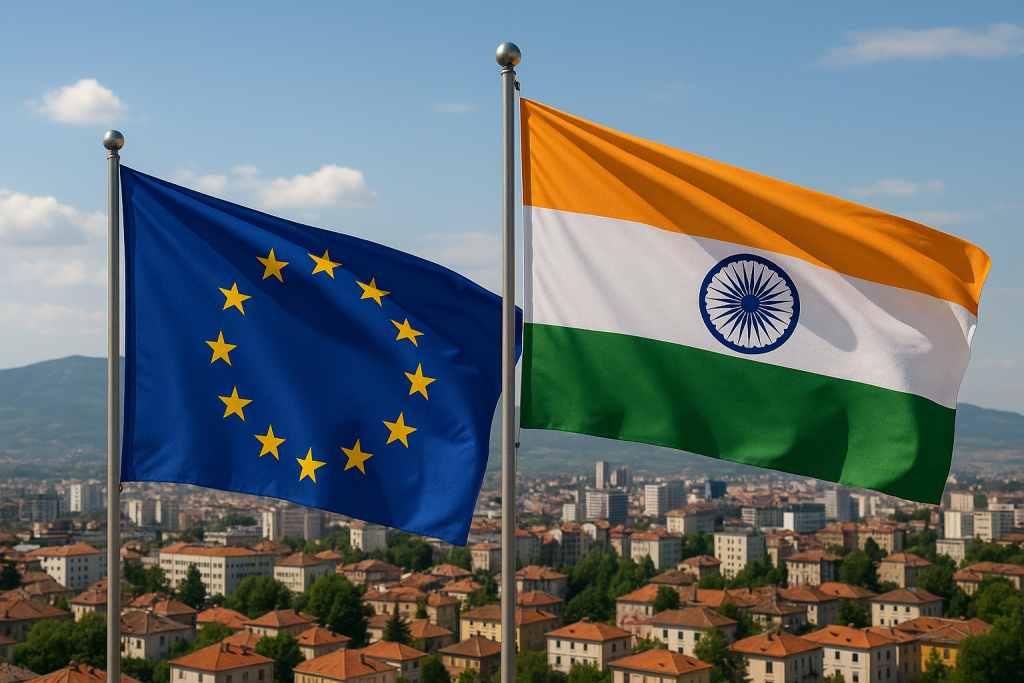
Ce rapport comprend deux parties. La première, intitulée « Bridging Horizons » (Rapprocher les horizons), se concentre sur la vision européenne de la relation, tandis que la seconde, intitulée « Strategic Integration » (Intégration stratégique), aborde la vision indienne.
Rapprocher les horizons : les relations économiques entre l’UE et l’Inde en 2030. Une perspective européenne
L’Inde et l’UE aujourd’hui
- L’Inde et l’Union européenne sont confrontées à de multiples crises communes, de la pandémie au changement climatique en passant par la transition mondiale vers un ordre multipolaire. Elles partagent également des préoccupations concernant l’utilisation de l’interdépendance économique comme arme et ont pris des mesures distinctes mais similaires pour renforcer leur sécurité économique.
- Si certains dans l’UE considèrent l’Inde comme un partenaire pour préserver les principes démocratiques dans les affaires mondiales, il existe un manque de compréhension de l’identité postcoloniale de l’Inde, qui façonne sa réponse à des événements tels que la guerre menée par la Russie contre l’Ukraine.
- Malgré cela, compte tenu de leurs préoccupations communes, l’UE et l’Inde ont une occasion unique dans les années 2020 d’approfondir leur partenariat et de façonner l’agenda mondial en matière de commerce, de numérisation, de changement climatique et de sécurité.
- L’amélioration des relations économiques sera essentielle pour réaliser le véritable potentiel du partenariat stratégique entre l’UE et l’Inde. Cependant, les négociations précédentes sur un accord de libre-échange ont échoué en 2013 en raison de préférences divergentes.
- Les relations entre l’UE et l’Inde pourraient contribuer de manière significative à la volonté de la Commission européenne de « réduire les risques » liés aux relations commerciales et d’investissement de l’UE. L’Inde peut offrir à l’UE un partenaire commercial précieux et l’accès à un marché vaste et en pleine croissance, tandis que l’UE a le potentiel de fournir à l’Inde les investissements, la technologie et l’accès au marché dont elle a besoin pour développer son économie.
Que peut offrir l’UE à l’Inde ?
- Si les exportations de marchandises de l’UE sont passées de 12,6 milliards de dollars américains en 2000 à 46,3 milliards en 2021, leur taux de croissance n’est pas suffisamment rapide pour diversifier de manière significative les relations économiques de l’UE.
- Vingt catégories de produits représentent 90 % du total des exportations de marchandises de l’UE vers l’Inde, les machines industrielles, les pierres et métaux, l’aérospatiale et les machines électriques représentant la moitié des exportations de l’UE.
- La part des exportations de l’UE vers la Chine (10 %) correspond à environ la moitié du poids de la Chine dans l’économie mondiale (19 %), mais les exportations de l’UE vers l’Inde (2 %) ne représentent qu’un quart du poids de l’Inde (7 %).
- La suppression des barrières à l’accès au marché ouvrirait cette opportunité supplémentaire pour les exportations de l’UE et contribuerait à diversifier les exportations de marchandises hors de Chine.
- À l’exception d’une seule, les 20 principales exportations de l’UE vers l’Inde ont vu leur part dans les importations indiennes diminuer au cours de la dernière décennie, en particulier après la signature par l’Inde d’ALE avec le Japon, la Corée et l’ANASE.
- La plupart des exportations de services de l’UE vers l’Inde ont augmenté en termes absolus et relatifs.
Que peut offrir l’Inde à l’UE ?
- Les importations de l’UE en provenance de l’Inde ont plus que triplé dans les années 2000, mais leur croissance a ralenti entre 2010 et 2019, passant de 44 à 54 milliards de dollars américains. Depuis 2010, la part de l’Inde dans le panier d’importations de l’UE stagne, contrairement à la part croissante des importations de l’UE en provenance de Chine.
- Les secteurs des importations qui connaissent la croissance la plus rapide sont l’aluminium, le fer, l’acier, le caoutchouc et l’ameublement. Certains de ces secteurs pourraient être touchés dans les années à venir par l’introduction d’un ajustement carbone aux frontières.
- Dans plus d’un tiers des secteurs d’importation de l’UE, la part des importations en provenance de Chine représente un quart du total. L’Inde offre des possibilités de diversification des importations dans des secteurs tels que les vêtements pour hommes, les produits chimiques organiques et les motocyclettes. Mais il est peu probable qu’elle remplace la Chine comme principale source d’importations d’ici 2030.
- Les importations de services de télécommunications et informatiques en provenance d’Inde dépassent déjà celles en provenance de Chine. Cependant, les importations d’autres services en provenance d’Inde sont inférieures à leur part d’il y a dix ans ou sont insignifiantes.
Les relations en matière d’investissement
- Le ratio d’intensité des investissements directs étrangers (IDE) de l’Inde est actuellement de 1,9 % du PIB, soit un niveau supérieur à celui de la Chine ou à la moyenne de l’OCDE. Les secteurs des communications, des services informatiques et du commerce de détail ont connu la plus forte croissance des IDE.
- Toutefois, le contexte politique des IDE en Inde est difficile, en partie parce que l’Inde a dénoncé unilatéralement les traités bilatéraux d’investissement. La part des entreprises affiliées européennes en Inde et leur part dans l’emploi dans ces entreprises ont augmenté, tandis que les parts de la Chine ont diminué, ce qui indique l’importance croissante de l’Inde pour les entreprises européennes.
- Les investissements manufacturiers de l’UE en Inde ont principalement visé à desservir le marché intérieur indien, de sorte que l’Inde n’a pas été en mesure de remplacer la Chine dans les chaînes de valeur mondiales. Cela s’explique en partie par un environnement tarifaire instable.
- Des tarifs prévisibles et des règles harmonisées renforceraient encore la confiance des entreprises et les investissements.
Défis pour l’approfondissement de la coopération
- Le délai pour conclure les négociations sur un accord de libre-échange entre l’Inde et l’UE avant les élections générales indiennes de 2024 est serré.
- L’Inde s’attend à un accord sur les quotas de visas afin de renforcer ses exportations de services, mais cela reste de la compétence des États membres de l’UE.
- Les nouveaux traités bilatéraux d’investissement de l’Inde sont relativement superficiels, et l’harmonisation des approches de l’Inde et de l’UE en matière de protection des investisseurs sera complexe.
- La politique industrielle de l’Inde est fortement axée sur la production automobile nationale et il pourrait être difficile pour le pays de réduire les droits de douane sur les importations de voitures en provenance de l’UE.
- L’accès au marché de l’alcool sera difficile car, contrairement à d’autres marchés, il reste le domaine de 28 États différents avec des droits et des lois en matière de licences différents.
- Le marché indien des marchés publics est discriminatoire à l’égard des fournisseurs étrangers. Il est également partagé entre le niveau fédéral et les États, ce qui ajoute à la complexité.
- L’UE et l’Inde ont des approches très différentes en matière de réglementation numérique, car le cadre réglementaire émergent de l’Inde pourrait ne pas offrir les protections complètes de l’UE en matière de données personnelles. Le lobbying efficace des entreprises américaines pourrait l’éloigner encore davantage des normes européennes.
- Bien que l’Inde ait promis de s’attaquer à ces questions, les négociations sur l’ALE n’ont progressé que lentement. L’Inde souhaite conclure un accord « à effet rapide », comme elle l’a fait avec l’Australie. Mais l’UE considère que cela est contraire à ses obligations dans le cadre de l’OMC.
- Les demandes de la société civile européenne en faveur du développement durable se heurtent à l’importance accordée par l’Inde à la souveraineté et à sa méfiance à l’égard du protectionnisme caché. L’Inde est particulièrement sensible aux efforts déployés par les pays développés pour imposer leur volonté aux pays en développement par le biais de la politique commerciale.
- L’UE doit également redoubler d’efforts pour convaincre l’opinion publique indienne que l’importance qu’elle accorde au développement durable n’est pas motivée par des instincts protectionnistes. Si l’Inde doit prendre conscience qu’il existe un consensus en faveur de la durabilité au sein de l’UE, il est essentiel de collaborer pour augmenter plutôt que réduire les échanges commerciaux dans les secteurs concernés par des mécanismes tels que le CBAM.
Intégration stratégique : la coopération entre l’UE et l’Inde en 2030 Le point de vue de l’Inde
Contexte : les relations entre l’Inde et l’UE dans une perspective stratégique
- Le partenariat entre l’UE et l’Inde a pris de l’ampleur grâce à un renforcement des relations politiques et économiques. Parmi les facteurs à l’origine de cette évolution figurent la croissance économique de l’Inde, le besoin de diversification de l’UE, les objectifs communs en matière d’énergies renouvelables et de changement climatique, ainsi que la convergence stratégique sur le rôle de l’Inde dans la région indo-pacifique.
- L’UE est le troisième partenaire commercial de l’Inde, représentant environ 11 % du commerce de marchandises de l’Inde. Cependant, les exportations indiennes vers l’UE sont actuellement limitées par l’absence d’accès en franchise de droits, ce qui se traduit par des performances inférieures à celles de ses concurrents.
- Les priorités économiques de l’Inde, notamment le renforcement de la sécurité économique, l’intégration dans les chaînes de valeur mondiales (CVM), l’amélioration de la transformation numérique, la transition vers une économie verte et l’attraction des investissements du secteur privé, soulignent la nécessité d’intensifier les relations commerciales entre l’UE et l’Inde afin de répondre aux besoins de développement de l’Inde.
Les relations en matière d’investissement
- Les investissements du secteur privé indien ont diminué en pourcentage du PIB depuis 2012. La diversification géographique et les contraintes d’utilisation des capacités limitent les investissements privés, rendant les IDE essentiels pour les investissements des entreprises.
- Les IDE en Inde ont toujours été inférieurs à ceux de la Chine, avec une croissance marginale de leur part dans la formation brute de capital. Les investissements européens, réputés pour leur qualité et leur transparence, ont dépassé ceux des États-Unis et du Japon.
- La nécessité d’augmenter les flux d’IDE vers l’Inde est l’une des principales raisons pour lesquelles le gouvernement indien encourage une plus grande intégration économique. L’initiative « Make in India » du gouvernement indien visait à attirer les investissements directs étrangers (IDE) pour la création d’emplois dans le secteur manufacturier de masse et l’intégration dans les chaînes de valeur mondiales (CVM). Cependant, l’accent mis sur la promotion des investissements a parfois éclipsé l’importance de l’intégration dans les CVM, ce qui a limité le succès de l’attraction des IDE dans le secteur manufacturier.
- La révocation des traités bilatéraux d’investissement et la réduction des protections accordées aux investisseurs ont eu un impact sur les flux d’IDE et suscité des inquiétudes parmi les investisseurs étrangers, y compris ceux de l’UE. Il est essentiel de résoudre les divergences de mentalité et d’approches en matière de règlement des différends pour développer les investissements de l’UE en Inde.
Secteurs et défis pour les exportations
- Les exportations de marchandises de l’Inde vers l’UE ont augmenté, mais la part de l’UE dans les exportations totales de marchandises de l’Inde a diminué en raison de la hausse des droits de douane, des différences de normes et des barrières non tarifaires.
- Les exportations agricoles indiennes sont confrontées à des défis en matière de conformité aux normes européennes et aux barrières tarifaires, tandis que les efforts visant à augmenter les exportations se concentrent sur les interventions numériques, les réglementations en matière de sécurité alimentaire et l’agriculture biologique.
- Il existe des opportunités d’augmentation de la demande d’acier indien dans l’UE en raison de la guerre en Ukraine, mais les droits de douane élevés et le mécanisme d’ajustement carbone aux frontières de l’UE posent des défis.
- Les textiles et l’habillement sont des secteurs sous-performants pour les exportations indiennes, mais un accord de libre-échange avec l’UE pourrait renforcer la compétitivité grâce à une baisse des droits de douane et à des réformes nationales.
- Malgré les coûts de fabrication compétitifs de l’Inde, les échanges commerciaux entre l’Inde et l’UE dans le secteur pharmaceutique sont limités par des réglementations complexes et des préoccupations liées à l’intégrité des données.
- La collaboration dans l’industrie automobile devrait donner la priorité aux technologies à faibles émissions et aux véhicules électriques, en mettant l’accent sur les cadres réglementaires, l’innovation et le développement des infrastructures.
- Le renforcement des relations économiques bilatérales dans le secteur des produits chimiques nécessite une cohérence réglementaire, une simplification des procédures d’octroi de licences et une protection renforcée de la propriété intellectuelle.
- Il existe des obstacles dans le secteur des services en Inde, en particulier pour les prestataires de services étrangers, mais des opportunités existent dans les domaines de la santé, des services numériques et des services professionnels grâce à des accords avec des États membres individuels de l’UE et au commerce de mode 4.
Les arguments en faveur des importations
- La politique commerciale passée de l’Inde a limité la croissance de ses exportations manufacturières et son intégration dans les chaînes de valeur mondiales. Le double objectif de protection de l’industrie et de participation aux chaînes de valeur mondiales a conduit à des inefficacités.
- La substitution des importations n’a pas été efficace en Inde en raison de la taille de son marché intérieur, ce qui a entravé sa capacité à être compétitive au niveau mondial. La participation de l’Inde aux chaînes de valeur mondiales est inférieure à sa contribution au commerce mondial, ce qui souligne la nécessité d’une plus grande ouverture aux importations et d’une participation accrue aux chaînes de valeur.
- L’Union européenne joue un rôle crucial dans la fourniture de biens intermédiaires et de technologies pour la production indienne et dans la progression dans la chaîne de valeur. L’érosion des gains tirés de la libéralisation des échanges commerciaux et le regain d’intérêt pour les accords de libre-échange, en particulier avec l’UE, reflètent la nécessité d’une plus grande ouverture et d’une meilleure intégration dans les réseaux commerciaux mondiaux.
Deux défis à l’intégration
- L’Inde a hésité à ouvrir son marché des marchés publics aux entreprises étrangères. L’UE souhaite accéder au marché lucratif des marchés publics indiens par le biais d’un accord de libre-échange. Le récent accord de libre-échange conclu entre l’Inde et les Émirats arabes unis comprend un chapitre sur les marchés publics, ce qui laisse entrevoir un changement d’attitude de la part de l’Inde.
- La libéralisation des marchés publics en Inde créerait des opportunités pour les entreprises européennes et permettrait de remédier au déficit infrastructurel de l’Inde. Un système de passation des marchés publics transparent pourrait attirer les investisseurs étrangers et accroître la concurrence locale en Inde. Les entreprises indiennes pourraient bénéficier de l’accès au marché européen des marchés publics, en particulier dans les domaines des services et des technologies de l’information. Un engagement plus étroit avec les parties prenantes en Inde contribuerait à susciter un soutien en faveur d’un changement positif et d’une intégration dans le secteur des marchés publics.
- L’Inde s’inquiète de la position inflexible de l’UE en matière de normes relatives au travail, aux droits de l’homme et à l’environnement. Les différences entre les normes environnementales et l’imposition par l’UE d’une diligence raisonnable extraterritoriale aux entreprises rendent difficile la recherche d’un terrain d’entente. Le gouvernement indien s’inquiète du fait que l’implication excessive de la société civile dans le commerce soulève des questions de responsabilité démocratique.
- Des accords commerciaux bilatéraux prévoyant des trajectoires convenues et mettant l’accent sur la promotion du développement durable pourraient dissiper les doutes concernant le changement climatique et les barrières non tarifaires. Il convient de donner la priorité aux mécanismes d’harmonisation et de coopération réglementaires. L’accent mis sur les incitations avec des responsabilités communes mais différenciées et une interaction transparente pourrait faciliter les progrès en matière de normes du travail et environnementales.
- L’UE et l’Inde accordent toutes deux la priorité à la durabilité, en particulier à la réduction des émissions de gaz à effet de serre et à la promotion de l’utilisation efficace des ressources. Une intégration plus étroite entre l’UE et l’Inde peut être bénéfique pour le commerce, l’innovation et la concurrence sur les coûts des biens liés à la transition écologique. L’Inde a besoin d’un plan de transition clair vers la neutralité carbone, et des sous-plans sectoriels peuvent aider à déterminer la conformité nette zéro des produits commercialisables.
- L’Inde réforme actuellement son code du travail et vise à l’aligner sur les conventions internationales. Les exigences en matière de sécurité au travail peuvent être prises en compte, mais des défis subsistent en ce qui concerne les droits du travail des employés du gouvernement. Comprendre les contraintes indiennes et trouver des solutions juridiques peut empêcher les normes de durabilité du travail de devenir un obstacle dans les négociations de l’ALE.