Meeting the challenges of EU-China relations
Authors

Although the campaign for the 2019 European Parliament elections has barely begun, European political debates already showcase an introverted continent that continues to revolve around national egotisms. Candidates neither take into account major geopolitical transformations, nor do they address the urgency of a European response to these challenges. This is particularly true for discussions about China’s rising power, whose economic and political mores are increasingly incompatible with a managed globalisation, which should force Europeans to react in common and at a strategic level. Built on state capitalism and the mass surveillance of its citizens, China is not just an alternative to the liberal European model based on competitive markets and individual freedoms. Through the massive outward investments that China has made since 2013 – the “New Silk Road” or “Belt and Road Initiative” (BRI) – it seems to be gradually imposing its model of economic and commercial governance on countries around the world.
On the eve of Xi Jinping’s visit to Europe and the EU-China Summit in April 2019, the European Commission has finally taken the initiative to modify the EU’s stance towards China, calling it both a “partner” and a “systemic rival”. These designations are addressed to both Beijing and the EU’s own Member States. Is China ready to demonstrate that its official discourse in defence of multilateralism commits it to credible reform of its trade practices? For their part, are EU Member States prepared for the cohesion required for a cooperative and defensive strategy that safeguards the defence of their interests?
China as a partner. Of course, the BRI offers opportunities for cooperation from which Europeans can benefit. The EU remains the region that attracts most foreign direct investment (FDI), and Member States have welcomed Chinese investment all the more positively since the 2008 crisis, which reduced their capacity for public investments.
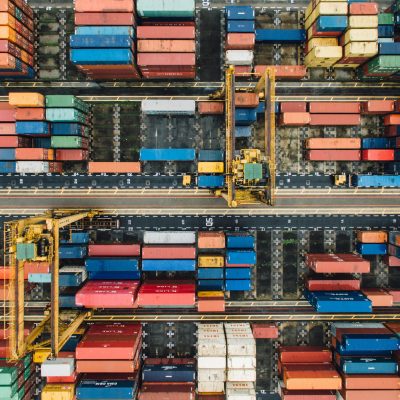
The search for better connectivity between Europe and Asia is also in line with the ongoing trade facilitation agenda. For transport alone, where the BRI aims both to diversify freight routes and improve the efficiency of multimodal infrastructure, the World Bank estimates that an average reduction of 11.9% in freight delays between BRI countries can reduce trade costs by more than 10.2%.
The rapid growth of the Chinese (and, more broadly, Asian) middle class, accompanied by a strong appetite for consumption, is leading to a concentration of global demand in Asia that is both attractive and inescapable for European companies. China already accounts for 70% of luxury goods purchases over the past ten years. Better access to the markets of China and its neighbours is essential to ensure the competitiveness of European firms in the face of the monopoly position of Chinese state-owned enterprises, which in turn are highly offensive in international markets, including in Europe.
China as a systemic rival. In the five years since its launch, the BRI has put Chinese trade distortions on display. The targeted European strategic interests must be assessed at the level of the entire Single Market, whether they are European industrial flagships, high-tech companies), European agri-food know-how, or port infrastructure (given that 94% of the volume of trade with China is carried out by sea). The vast majority of Chinese investments are made by state-owned enterprises whose lack of transparency in financing makes it impossible to apply the WTO’s multilateral rules on subsidy restrictions, which are already not very constraining.
An additional factor of systemic imbalance is China’s continued claim to be a developing country in order to benefit from special and differential treatment under the WTO regime. Finally, China’s massive outward investments amplify the lack of reciprocity in access to the Chinese market. The annual reports of the European Chamber of Commerce in China state these impediments clearly. They include the closure of public procurement markets and discrimination against foreign companies, restrictions on investment, forced technology transfers, establishment in China being suspended by a licensing obligation whose granting by central and local administrations remains discretionary, and opacity of Chinese regulations.
At present, Europeans have only weak signals about the transformative risks that uncontrolled trade with China could bring about in the future. For example, new rail freight lines linking the EU and China have already doubled the number of block trains between 2017 and 2018, but the number of trains arriving from China is twice as high as those leaving Europe.
The evolution of the BRI also seems to reveal that the Chinese government is not overly concerned with the sustainability criteria promoted by multilateral development institutions. There are recurrent problems of over-indebtedness (in fact, several countries, including Pakistan, Nepal, Burma, and Malaysia, have already abandoned BRI projects), non-compliance with international social and environmental standards, and corruption. As the New Silk Road is a vehicle for promoting Chinese technical standards and imposing the Chinese government’s trade practices on its partners, it is in the interest of the EU to ensure that China’s integration into the world economy will not gradually lead to a Chinese-style globalisation.
The response by Europe’s partners. Several major powers have begun to implement their responses to the BRI. India launched the defensive Security and Growth for All in the Region strategy (SAGAR) in 2015. Japan responded with its more cooperative Free and Open Indo-Pacific Strategy (FOIP) in 2018. In the United States, the Trump administration last summer replaced the 2012 Obama-era strategy to contain Chinese influence (Pivot to Asia) with the more aggressive Pushback strategy, which aims to reduce Chinese power.
The European response has been more delayed. Member States first reacted unilaterally and in a disorderly manner. The Chinese government even encouraged such divisions, which are working to its advantage. But a coordinated European strategy is more necessary than ever as Europe’s response to the BRI comes in the context of its ‘third way’ approach to globalisation: the European Union is trying to chart a path between aggressive unilateral American action that turns away from multilateralism, and the Chinese approach, which proclaims to be multilateral but fails to implement the domestic economic reforms that ensure a level multilateral playing field. To keep the United States at the WTO negotiating table, it is necessary to bring China back into the WTO.
The need for European cohesion. As the Trump administration has increased the pressure on Beijing by raising US customs duties on Chinese imports, Europeans must in turn exert pressure to demand reforms from Beijing. If bilateral negotiations between the US and China were to be concluded with bilateral market-opening concessions but without structural reforms of Chinese state capitalism, it would be to the detriment of European interests and WTO rules.
The European Commission demonstrates a more muscular approach in its Communication of 12 March “EU-China: A strategic outlook” which defines the level at which the EU’s response to China must be situated and prescribes a cooperative and defensive approach.
The Commission calls on China to respect the commitments it has made in multilateral fora and in the context of negotiations, including on investment, civil aviation, the protection of geographical indications, as well as reform of the WTO. It also calls on EU Member States to coordinate at short notice (i.e. by the end of 2019 or 2020) to apply measures that protect European interests. This would become all the more necessary should Beijing fail to show goodwill to ensure fair trade, e.g. by ensuring sustainable connectivity standards, notifying subsidies, and opening access to its market.
These measures include: (1) the swift implementation of the recently adopted foreign investment control mechanism, (2) the strengthening of rules to avoid distortions from investments by third-country state-owned enterprises in the Single Market, (3) the protection of Member States’ digital infrastructures, (4) the adoption of the International Public Procurement Instrument to ensure greater reciprocity in the opening of public procurement markets, and (5) the promotion of social and environmental standards in European public procurement tendering criteria.
Chinese investments have targeted the flagships of European industry (such as Pirelli in 2015) and key strategic interests (such as the robot manufacturer KUKA and already 14 European ports, with a majority stake in 6 of them). This has caused a sudden awakening amongst Europeans that the entire Single Market may be weakened by a lack of coordination and failure to anticipate the impact of Chinese investments. At present, all international trade is exposed to systemic risk if the United States continues to block the appointment of new judges to the Appellate Body of the WTO Dispute Settlement Mechanism by the end of the year. To get Beijing and Washington to strengthen the multilateral rules that are the sole guarantors for a managed globalisation, Europeans have no alternative but to use the full weight of the Single Market to obtain credible reforms of Chinese governance. Without this additional pressure from the European Union and other partners around the world, China will have everything to gain. It could make some concessions to Washington, but pursue a path of its own, without accepting a strengthening of multilateral rules. The BRI’s transformative force, coupled with the geopolitical withdrawal of the United States, would only strengthen China’s grip.
Emmanuel Macron’s initiative to bring Angela Merkel and Jean-Claude Juncker together for a meeting with Xi Jinping on 26 March is a significant step that highlights the importance of the cohesion that EU Member States must maintain vis-à-vis China. Cohesion must now be built with all Member States. The various coordination platforms that the European Commission proposes to set up would contribute to this goal by improving the capacity to anticipate the risks induced by persistent trade distortions and China’s rise to power. This legacy of the outgoing Commission should be covered in the campaign for the European elections this May and be supported by incoming MEPs and the new Commission that will be appointed in autumn.