Other document
United in diversity? National responses to the European energy crisis
Romana Březovská (AMO), Georg Zachmann (Bruegel), Giovanni Sgaravatti (Bruegel), Thomas Pellerin-Carlin (JDI), Phuc-Vinh Nguyen (JDI), Leon Leuser (JDI), Karin Thalberg (JDI), Davide Panzeri (ECCO), Jorge Galindo (EsadeEcPol)
| 30/05/2022
On February 24th 2022, Vladimir Putin invaded Ukraine for the second time in eight years. Once again he violated the international treaty his predecessor had ratified in 1994, that committed the Russian Federation to “respect the independence and sovereignty and the existing borders of Ukraine”. As the war in Ukraine continues, Russian energy has emerged as a key dimension for at least three reasons.
First, Russian energy exports are Putin’s main source of funding. In 2021, revenues from Russian fossil fuels made up half of the Russian federal budget. In 2022, with high oil and gas prices and still no implemented embargo on the horizon, Russia may gain as much as €250bn in revenues from its oil and gas exports to the European Union (EU) – four times more than Russia’s military budget. Oil and gas exports remain the main pillar of the Russian economy. That is why the EU is attempting to target Russian fossil fuel exports through economic sanctions in order to stymie this crucial source of funding for Russia’s military effort.
Second, Vladimir Putin uses energy supplies as a geopolitical weapon to limit individual EU member states’ freedom of action and sow disunity within the EU. To date, Russia has introduced de facto embargos on three EU member states (on Russian gas exports to Poland, Bulgaria and Finland), while its demands to pay gas in rubles are generating disunity among member states.
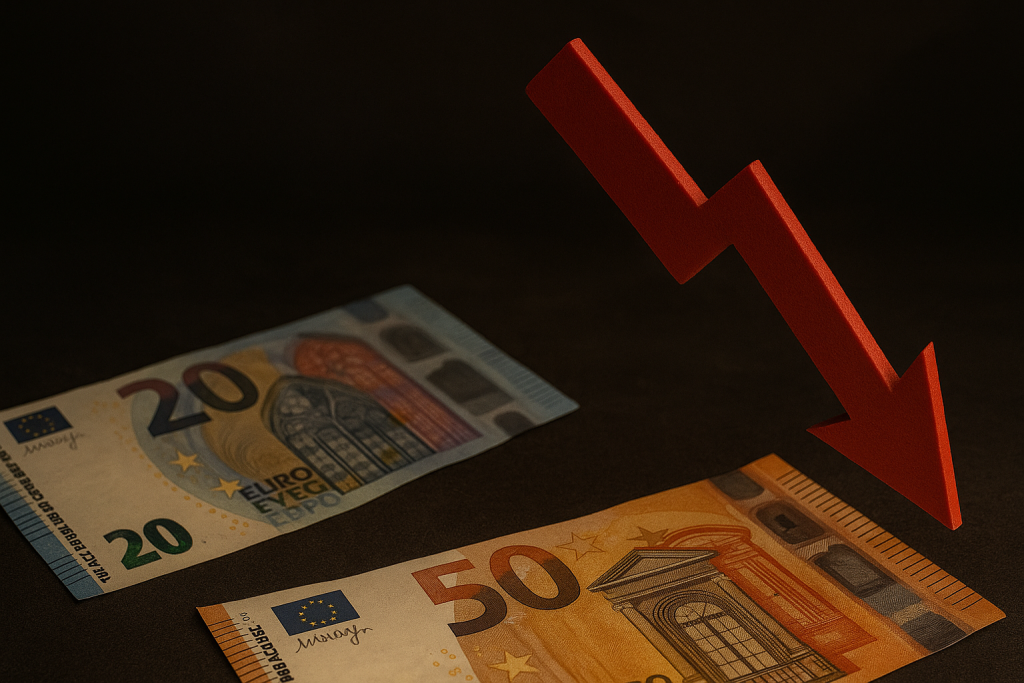
Third, Putin’s war on Ukraine intensifies the pre-existing energy price crisis the European Union has been living through since the summer of 2021. This leads to slower economic growth, higher inflation and lower purchasing power for Europeans.
Against this backdrop, a series of national energy policy measures have been introduced to tackle the high energy prices, before and after Putin’s second invasion of Ukraine. This joint paper aims to provide a brief analysis of the national responses, in light of the Commission’s REPowerEU plan with a view to informing the EU debate on charting an European way out of the crisis that is politically, economically, socially and environmentally sustainable. To do so, five European Think Tanks based in Belgium (Bruegel), Czechia (AMO), France (Jacques Delors Institute), Italy (ECCO) and Spain (EsadeEcPol), joined forces to produce this briefing, which includes national case studies in six member states (Czechia, France, Italy, Germany, Spain, Sweden) that together represent two thirds of the EU population, GDP, and energy consumption. This briefing concludes with policy recommendations that aim to inform the debate of the 30th-31st May 2022 European Council, and forthcoming European and national decisions.
SUR LE MÊME THÈME
ON THE SAME THEME
PUBLICATIONS
The Ukraine Facility
Promoting peace is not the same as fighting war
Arsenal Europe, Financing Military Capabilities for Ukraine and EU Member States
MÉDIAS
MEDIAS
Présidence tournante de l’UE: «La Belgique est viscéralement attachée à la construction européenne»
Le monde dans tous ses états
Planification écologique : des avancées en 2023, mais encore beaucoup d’incertitudes pour 2024
ÉVÉNEMENTS
EVENTS
The EU’s response to Ukrainian refugees three months on
Académie Notre Europe | “Europe of migration” session [FR]
Euroquestions #67 | European defence in the face of war in Ukraine [FR]
Académie Notre Europe | “Europe in the world” session [FR]
Le Grand Continent | L’Union européenne doit-elle s’élargir ? [FR]
Euroquestions #66 | Between the Slovakian and Polish elections, where is Central Europe heading? [FR]
Euroquestions #64 | A look back at the 2023 State of the Union speech [FR]
Euroquestions #60 | How is Europe organised to fight inflation?
Euroquestions | EU-China relations: rivals, competitors, partners? [FR]
European Conference | Harvard
Round Table | Energy PROSPECTS EU Knowledge Exchange Workshop
Euroquestions 56 | How can the European Union arm Ukraine?
CONFERENCE | WHAT DIPLOMATIC OPTIONS FOR FRANCE IN THE STRATEGIC OUTCOME OF THE RUSSIAN INVASION OF UKRAINE?
Euroquestions #55 | European foreign and defense policy tested by the war in Ukraine [FR]
Conference-debate: Can the European Union’s monetary policy prevent stagflation? [FR]
Euroquestions | Which European response to the US Inflation Reduction Act (IRA)?
Conference | How to integrate Ukraine into the European Union and according to what agenda? [FR]
Does the 2023 budget allow the French to cope with the energy crisis? [FR]
Euroquestions | Will the invasion of Ukraine strengthen or weaken the EU integration process?
Europe, from a peace project to a power project [FR]
Euroquestions | What about energy poverty in Europe and its challenges in times of inflation? [FR]
Euroquestions | Is war in Ukraine putting cybersecurity at risk in Europe?
Webinar | What financial architecture for the EU to face the economic, security and environmental challenges of the 21st century?
Webinar | War in Ukraine: what consequences for agri-food supplies in Africa and Europe? [FR]
Euroquestions | Czech Presidency of the Council of the EU: what agenda? [FR]
Balkans, Eastern Europe… Which European Political Community? [FR]
Round-tables on new gas perspectives for the EU
The European Union’s energy supply in the face of geopolitical and environmental challenges
Euroquestions | Embargo on Russian fossil fuels: how can Europe stop funding Putin’s war on Ukraine?
Webinar | Africa-Europe: Crossed views on the war in Ukraine [FR]
My own Europe #1 – Energy geopolitics : The European Union and the climate challenge [FR]
Euroquestions | EU-Russia: first cardinal point of the European strategic compass? [FR]
Euroquestions | How European is the new German coalition ?
The 2022 French Presidency of the Council of the European Union
Euroquestions | French Presidency of the Council of the European Union: Context and priorities. [FR]
Will the Fitfor55 Package Make the Housing Crisis Better or Worse ?
Euroquestions | Inflation, a new risk for the European economy? [FR]
Euroquestions | The Geopolitics behind the European Gas Shock
Euroquestions | The German energy transition: challenges for a new coalition [FR]
Euroquestions | German elections: what ambitions for the green party? [FR]
Euroquestions | Porto Social Summit: 3 years after Göteborg, which social Europe? [FR]
Webinar | 7th conference on sustainable development of mediterranean small islands
Wébinaire | Présentation du rapport “Les français et l’Europe entre défiance et ambivalence”
La Pacte Vert européen, mode d’emploi
Watch the all conference
Energising the Green Deal
Energy Innovation : how to deliver on the European green deal
Paris, 5 November 2019 – How to finance Energy Innovation in Europe in order to reach Climate neutrality by 2050?
Webinar 1 – The Green Deal & Energy Innovation : what should the new European Commission do during its first 100 days in office?
Paris, 21 June 2019 – European Citizens and Consumers: seizing the opportunity of the energy transition
Brussels, 20 June 2019 – EUSEW – What makes consumers tick? Best practices and tools
Brussels, 18 June 2019 – Sustainable finace for innovation and energy efficiency
Brussels, 24 May 2019 – Research and Innovation as a compass for the future we want
Strasbourg, 16 May 2019 — What role for buildings in the Europe’s transition to a climate-neutral economy ?
Paris, 16 May 2019 – Understanding the European Energy Transition
Brussels, 15 May 2019 — A Long Term Strategy for Europe’s transition to a climate-neutral economy: what role for electricity ?
Brussels, 15 May 2019 — A Long Term Strategy for Europe’s transition to a climate-neutral economy: what role for heat pumps?
Florence, 9 may 2019 — Policy Advisory Council of the European University Institute’s Florence School of Regulation
Nantes, 8 May 2019 — District Heating & Cooling for All – Involving Citizens, Customers and Consumers
Paris, 7 May 2019 — Energy security in the European energy transition
Paris, 6 May 2019 — Global oil executives and the european energy transition
Paris, 6 May 2019 — Understanding the european energy transition
Brussels, 2 May 2019 — What has the European Commission achieved for the energy transition during the last five years?
Prague, 30 April 2019 – A Long Term Strategy for Europe’s transition to a climate-neutral economy – what role for nuclear?
Brussels, 24 April 2019 – A Long Term Strategy for Europe’s transition to a climate-neutral economy
Paris, 12 April 2019 – Understanding the European energy transition
Paris, 11 April 2019 — Social sciences for the energy transition: which EU support?
Paris, 6 April 2019 — Social justice in the energy transition in Europe
Malmö, 27 March 2019 – Energy Norway’s Winter Conference
Monaco, 25th of March – Monaco Blue Initiative : Ocean updates
Berlin, 20 March 2019 – New Paradigm Workshop : Climate change, the potential for cross-border Action
Brussels, 19th March – High-level conference: Oceans the future of the Blue Planet
Berlin, 6 March 2019 — European Climate Initiative (EUKI) – Working group on Future of Mobility: The Role of Innovation in the Mobility Sector
Brussels, 28 February 2019 — A Long Term Strategy for Europe’s transition to a climate-neutral economy
Brussels, 19 February 2019 – The European Energy Transition : a year ahead of the twenties
Aubervilliers, 27 October 2018 – Citizen consultation: the Europe we want
Paris, 9 October 2018 – Eurociné, “The environment and us: a balance in danger”
Bruxelles, 9 October 2018 – H2020 Contractors’ Workshop on Social Sciences and Humanities
Bruges, 12 July 2018 – Negotiating the Energy Union
Bruges, 3 July 2018 – Negotiating the Energy Union
Bruges, 2 July 2018 – Introduction to the Energy Union
Brussels, 7 June 2018 – Learning from experience and involving energy-citizens: two ways of improving energy-related policymaking
Brussels, 6 June 2018 – The Energy Transition: which role for the European Union?
Paris, 25 May 2018 – Notre Europe Academy: A Green and Citizen Europe
Madrid, 23 May 2018 – The role of National Promotional Banks (NPBs) in climate finance
Florence, 10 May 2018 – New Forms of Markets and Solidarity Emerging in the EU Energy World
Madrid, 10 April 2018 – Europe through Spain and France’s eyes
Erasmus of Politics – Strasbourg cursus of the Académie Notre Europe trip to Rome
Paris, 26 January 2016 – Launch of the Colgate Alumni Club of Paris
Brussels, 25 October 2017 – The penultimate debate on Russian gas to Europe
Hradec Kralové, 30 June 2017 – The Migration Crisis and the EU: Quotas as a Solution?
Paris, 10 June 2017 – 6 geopolitical challenges for the new President of France
Luxembourg, 3 May 2017 – What place for Europe in France? The citizens facing their responsibilities
Facebook Live, 3 May 2017 – Yves Bertoncini @LaCroix debate on the french presidential election