
Why UK should also rejoin European civil protection
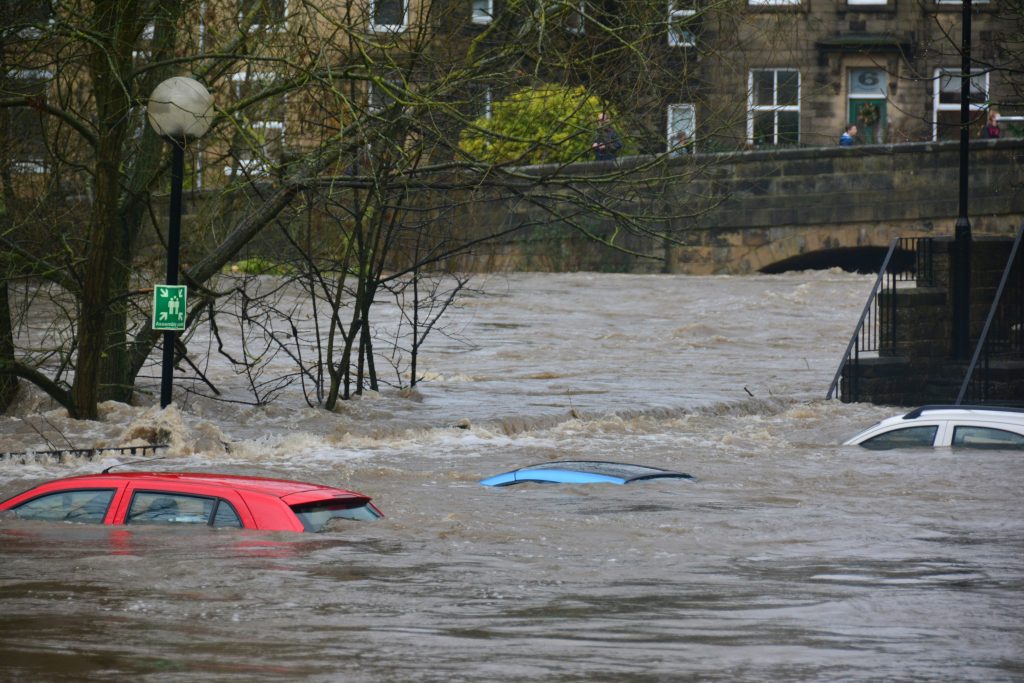
Following Brexit, the United Kingdom left nearly all EU programmes through which the Union dedicates resources for specific purposes. But it is now slowly starting to rejoin a few. On 1 January 2024 it rejoined the EU’s ‘Horizon Europe’ programme, dedicated to research, and ‘Copernicus’, covering earth observation. UK membership was foreseen under the UK-EU Trade and Cooperation Agreement but negotiations were effectively put on hold for a while due to the poor relations between the Johnson government and the Commission. The UK is now reportedly hoping to finish talks next month on rejoining the EU’s flagship Erasmus+ student exchange programme from 2027, where its participation is widely missed by EU member states. But there is another less iconic but truly effective programme that the UK would also be wise to reapply for: European civil protection.
This EU mechanism is well-known when severe storms, floods, landslides or fires occur that need an urgent and collective response. Once triggered by a participating country facing such disasters, it provides emergency assistance through a coordination centre, which serves as the operational hub of the mechanism since 2001, with its own 24/7 situation room.
Since the very first European Council resolution in 1991 on improving mutual aid between member states in the event of natural or technological disasters, efforts to enhance this type of cooperation and to dedicate concrete instruments to it have been growing. The first purpose is to pool the resources and skills that such transboundary events require in order to have all capacities promptly steady. From water purification items to mobile shelters, boats, high-capacity pumps, sandbags, power generators, vehicles or firefighters, certified and registered equipment can thus be swiftly deployed on the ground together with rescue teams and medical care in moments where time matters most. This pooling is achieved on a voluntary basis, with response capacities kept ready and committed to the European mechanism for one or more years.
On top of this voluntarily pooling, the EU started in 2019 to equip and finance its own rescue reserve (“rescEU”), based in different spots scattered across the continent, in the light of cross-border forest fires and flooding on EU member states’ territory. The following year, the Covid pandemic led the Commission to boost the mechanism’s budget capacities from €1.4bn to €3.5bn for the period 2021-2027 to help it take on new responsibilities in the field of medical aid.
Outside the EU, the civil protection mechanism is also used when international disasters occur for effective operational cooperation between national civil protection services, with once again an important role for the Commission to facilitate that coordination. Overseas, it is also used to provide consular assistance to EU citizens in regions where some member states do not have such representations, and to help them seek evacuation (in 2021, 3,000 citizens from 18 different European countries were evacuated from Afghanistan; in 2024, it evacuated 1,400 European citizens from places such as Lebanon and Haïti; and did so again this year during the Israel-Iran military escalation).
The UK used to play an active role in this mechanism until Brexit. It is remembered in the Commission as a reliable actor, participating in 14 emergency operations across Europe and the world between 2014 and 2020. It benefited from the mechanism during the Covid-19 crisis, using them to fly back home 2,600 citizens, and has twice triggered them during floods and storms.
Brexit does not prevent the UK from rejoining the mechanism. European civil protection is open to non-EU members. Their number has increased to reach today as many as ten countries outside the bloc, namely from the European Economic Area and candidate countries to the EU (Albania, Bosnia and Herzegovina, Iceland, Moldova, Montenegro, North Macedonia, Norway, Serbia, Türkiye and Ukraine), where it has delivered millions of emergency items and conducted medical evacuations since the full Russian invasion of Ukraine in 2022. Beyond those ten ‘participating States’, the Commission has also signed agreements to facilitate preparedness in emergency situations with Algeria, Tunisia, Switzerland, the USA or Australia. But none with the UK.
Rejoining European civil protection should be considered for three compelling reasons. First, it is in the UK’s direct interest. With climate change accelerating and frequently damaging our continent, the British Isles are already experiencing heavy storms and floods and will only experience more. These natural catastrophes can outstrip the capabilities of a lone country.
Second, it would not have political costs. It would not cross any of the Labour government’s red lines. Civil protection does not interfere with the single market, the customs union or free movement. The financial contributions made by participating states are not public, but they are not considered to be significant. Legally, it should remain consistent with the British plans for emergencies which are governed in the UK by the Civil Contingencies Act 2004, with specific arrangements in Scotland, Wales and Northern Ireland.
Last but not least, diplomatically, rejoining the European civil protection mechanism would certainly contribute to the much-needed rebuilding of trust in the UK’s relationship with its EU partners, which Brexit has seriously eroded. Showcasing solidarity with European countries in dire moments would be a meaningful way to give a deeper dimension to the ‘reset’. Member states view Starmer’s policy as too solely focused on various technical ways to shortcut access to the single market to spur British growth. “Jobs, bills and borders” are a slogan for a UK audience but not for the Europeans, who wish the policy would encompass more shared public goods and joint concerns with them. As with Erasmus+, this would reset the human touch it has lacked until now. Regarding the European Commission, such a reentry would be welcomed and is considered a no-brainer.
This blogpost, written by Sébastien Maillard, was published by “UK in a changing Europe”
Authors

Other publications on same theme
 Policy Paper
Making health a European priority