Single Market Summit 2026
Online
Speakers
 Bart de Wever Prime Minister of Belgium
 Kristalina Georgieva Managing Director of the International Monetary Fund (IMF)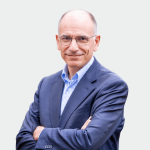
 Fritzi Köhler-Geib Member of the Executive Board of the Deutsche Bundesbank
 Paolo Gentiloni former Prime Minister of Italy and European Commissioner for the Economy
 Gelsomina Vigliotti Vice-President of the European Investment Bank (EIB)
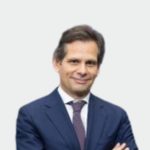 Alberto de Gregorio Merino Director-General of the Legal Service of the European Commission
 Fabrizia Lapecorella Deputy Secretary-General of the OECD
 Kyriakos Iordanou Permanent Secretary of the Ministry of Energy, Commerce and Industry of Cyprus
Single Market Summit 2026
Date / Location:
9 June 2026, 9:00AM – 2:00PM
in Brussels (only with invitation), online
Summary:
One Europe, One Market
In today’s geopolitical landscape, marked by growing competition among major economic blocs, Europe’s priority must be to strengthen its own economic base by completing the Single Market. Only by fully leveraging the scale of its 450 million consumers can the EU remain a relevant global actor, compete effectively, and build the financial and industrial capacity needed in a world where internal economic strength is the foundation of geopolitical influence. Deepening integration in capital, energy and telecommunications requires political courage and difficult trade-offs, yet without tackling these foundational issues, Europe’s growth and sovereignty will remain constrained.
The Jacques Delors Friends of Europe Foundation has launched a Coalition of Action to gather business, trade unions, academia, civil society and institutions behind one clear timeline: building momentum and deliverables towards completing the Single Market by 2028. It is building on the recommendations of the Letta report and the commitments of the European Commission towards ‘One Europe-One Market’. The focus is practical and urgent: breaking down the barriers to integrate our underdeveloped and fragmented financial markets, create the opportunity for firms to scale up in Europe and solve its governance issues for a European growth strategy.
‘Framed by the Single Market Matrix launched in February, the Summit will focus on three priority areas most relevant today: Savings and investments union, a 28th regime and accelerated decision-making. It will define what success looks like for businesses and citizens, while kicking off a European roadshow for the second half of the year. Discussions aim at identifying concrete roadblocks and build momentum for immediate action and will be grounded in data – including citizen insights on expectations for competitiveness, fairness and economic opportunities – to ensure the narrative resonates beyond Brussels.
The objective is clear: to move from diagnosis to delivery and show that Europe can act together.
Schedule:
09.00 – 09.30: Registration and welcome coffee
09.30 – 10.30: SESSION I – Unlocking Europe’s investment power
Europe does not lack savings. It lacks an integrated market that channels those savings into productive investment. Fragmented capital markets limit scale, raise costs and drive innovative firms abroad. Completing the Savings and investments union is essential to increasing the supply of long-term investment and strengthening Europe’s competitiveness.
The benefits are clear: deeper pools of capital, better risk-sharing, stronger support for strategic sectors and greater resilience in times of crisis. But roadblocks persist – regulatory fragmentation, uneven supervision, insolvency differences and limited retail participation. If Europe’s structural problem is underinvestment and a weak business case environment, how do we fix it?
- What are the three most urgent fixes to create momentum towards a truly integrated EU capital market?
- How can we align supervision and insolvency frameworks without reopening endless institutional battles?
- What would success by 2028 look like for scale-ups, pension savers and institutional investors?
- How do we make the Savings and investments union tangible for citizens, in jobs, pensions and innovation at home?
11.00 – 12.00: SESSION II – One Market, one regime
For many companies, expanding across Europe still means navigating 27 legal systems, tax regimes and administrative cultures. A 28th regime – one common legal and tax framework for doing business across the EU – could simplify scaling and strengthen Europe’s attractiveness.
How do we design a regime that is optional, business-friendly and politically realistic – while delivering real simplification rather than cosmetic harmonisation? The potential rewards are substantial: lower compliance costs, faster cross-border growth and a stronger internal market for innovation. But political sensitivities around national competences, taxation and corporate law remain major roadblocks.
- What concrete features must a 28th regime include to make a real difference for start-ups and scale-ups? What should be the minimum passporting criteria?
- How can mutual legal recognition and EU-wide tax incentives be structured to respect national prerogatives while enabling scale?
- What sectors could pilot the approach first?
- How can we ensure that simplification reduces the cost of doing business and aligns with investment cycles?
12.00 – 12.10: SPECIAL ADDRESS – The One Market promise and how to achieve it
12.10 – 13.00 : SESSION III – Setting priorities and accelerating delivery
European policymakers recognise the region’s competitiveness challenge, yet too often there is political inertia and fragmentation of decision-making standing in the way of progress. Key policies are shaped in isolation, such as those for capital markets, energy and digitalisation, even though they are closely related. If Europe’s core problem is not ambition but delivery, a more strategic approach is required. Faster decision-making, clear political ownership and harmonised regulation are critical to improving the investment climate and re-energising the single market as Europe’s growth engine.
- How can Europe offer a thriving environment for its companies in areas with large investment needs?
- Should policies for capital, labor and product markets, as well as support for strategic sectors, be formulated at a higher political level to overcome fragmentation and avoid unnecessary distortions?
- Are enhanced cooperation or coalitions of the willing part of the solution? Is it possible to eliminate national gold-plating to avoid regulatory add-ons and uneven enforcement of common EU rules?
- Is there scope to improve the process for the trilogue between the European Commission, EU Council and the European Parliament?
13.00 – 14.00: Lunch
Online
Speakers
- Bart de Wever Prime Minister of Belgium
- Kristalina Georgieva Managing Director of the International Monetary Fund (IMF)
- Fritzi Köhler-Geib Member of the Executive Board of the Deutsche Bundesbank
- Paolo Gentiloni former Prime Minister of Italy and European Commissioner for the Economy
- Gelsomina Vigliotti Vice-President of the European Investment Bank (EIB)
- Alberto de Gregorio Merino Director-General of the Legal Service of the European Commission
- Fabrizia Lapecorella Deputy Secretary-General of the OECD
- Kyriakos Iordanou Permanent Secretary of the Ministry of Energy, Commerce and Industry of Cyprus