Hungary: All’s well that ends well?
Authors
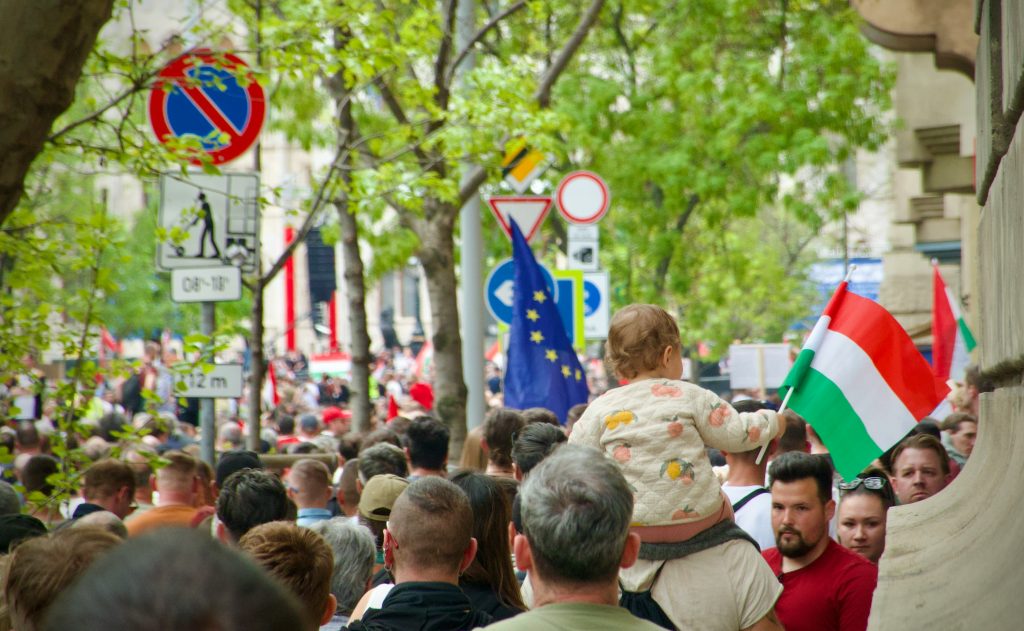
Is this an appropriate title, following the landslide victory of Hungary’s conservative opposition leader, Peter Magyar, in the elections on 12 April 2026? Yes, but a serious question mark must nevertheless be added!
Why has Hungary, in the space of a few years, become a ‘lone wolf’, or even a ‘pariah’, amongst the 27 Member States of the European Union? It is the stance taken by Viktor Orbán’s government that explains this almost unanimous judgement: a highly critical assessment of the politician who led the Hungarian government first between 1998 and 2002, then for sixteen years from 2010 to 2026, and above all of his policies and the system he established during those years.
Initially, a European majority had welcomed Viktor Orbán’s rise to power in Hungary – a country which, at the end of the Warsaw Pact and during the fall of communism, had been one of the leaders of the movement for the reunification of the continent and for European and transatlantic integration.
This man had entered politics as a young liberal, having worked as a student on ‘Solidarność’: he had been one of the leaders of the anti-communist demonstrations in Budapest. I remember my first meetings with this young opposition leader, who struck us as committed and spoke of a ‘suffering Hungary’. At the time, he had sought to align himself with Chancellor Helmut Kohl, who became, in a sense, his first political mentor. Despite some reservations, we regarded him as one of the finest talents of this young Hungarian democracy.
Why has he, in a relatively short space of time, become public enemy number one for the majority of EU capitals? The reason lies notably in his refusal to follow the coordinated policy of the 27 member states to counter Russia’s invasion of Ukraine in 2022. He played a strictly national card, given his country’s dependence on Russian gas supplies, whilst at the same time seeking relatively open cooperation with Moscow. This stance culminated this year in his refusal to approve the €90 billion survival loan for Ukraine. He thus blocked this aid, even though the European Commission could have acted legitimately without his consent. Furthermore, his system of governance has shown signs of corruption, and even violations of the rule of law.
Why this profound change in this former liberal hope? Why did we react so belatedly to this development, which was nevertheless increasingly visible, particularly since the death of his political ‘godfather’ in 2016? Jean-Claude Juncker agreed with me that we should have taken his resignation during the refugee crisis more seriously, as well as his positions on the policy of bringing the Balkans closer to the EU.
Viktor Orbán made it clear to us that, in reality, Western Europe was not genuinely interested in the gradual integration of these six countries. Hungary felt isolated, a perception reinforced by a certain ‘small country’ complex, and by its status as a ‘CEEC’, as they were once called in Paris and Brussels.
I wonder whether we have truly grasped the profound upheavals that the countries of Central, Eastern and South-Eastern Europe have experienced since the early 1990s. Should we not have supported them more throughout all those years? Have our political parties and foundations invested enough in these countries?
Ultimately, we Western Europeans have hardly been up to the task. The history of eastward enlargement bears this out: we initially hesitated, imposing technocratic conditions through the Copenhagen criteria of June 1993, the effect of which was at times dissuasive. We also delayed their accession through preliminary ‘screening’ procedures, culminating in the European Council’s decision of December 1997 to divide these countries into two groups for accession negotiations. Ultimately, we congratulated ourselves on this ‘record’ speed in the enlargement to include ten countries…
It seems to me urgent that we learn the lessons from this Hungarian experience – which is partly comparable to the developments, marked by ups and downs, observed in Poland, the Czech Republic, Slovakia and Romania – in order to ensure the successful integration of the Western Balkans. These countries have been waiting for a clear perspective for nearly thirty years. The European Union must take these decisions without delay!