Brief
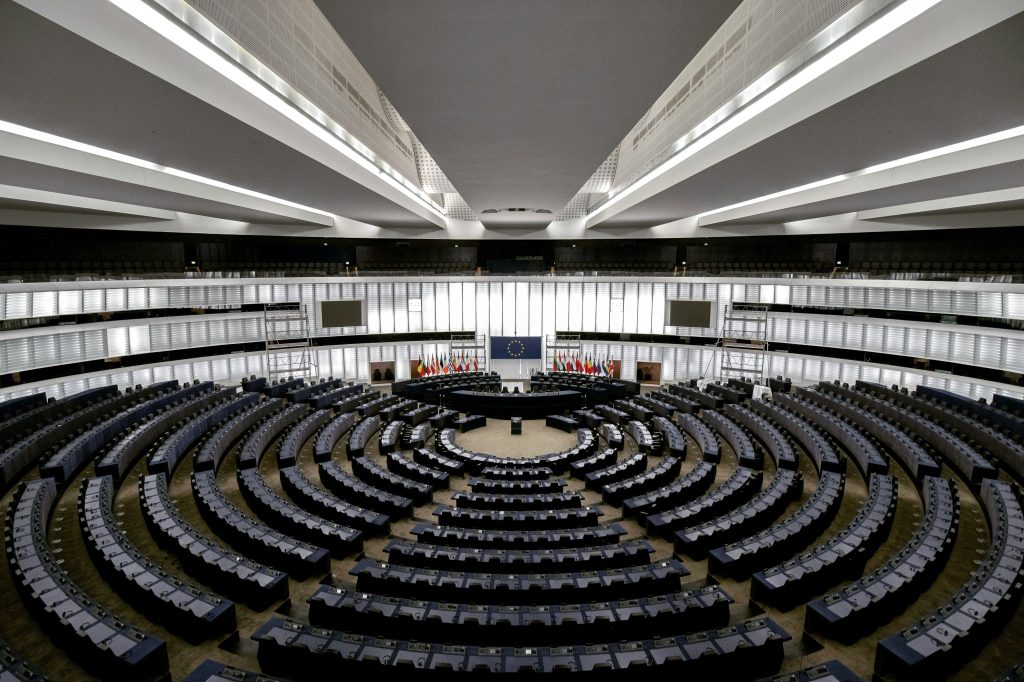
The European Parliament, Another Parliament
This paper is the result of a working group chaired by PASCAL LAMY, President emeritus of the Jacques Delors Institute, with CHRISTINE VERGER, Advisor at the Jacques Delors Institute acting as rapporteur, and composed of PERVENCHE BERÈS, Member of the European Parliament, JEAN-LOUIS BOURLANGES, Member of the French Parliament, MONICA FRASSONI, Co- President of a European political party, VALENTIN KREILINGER, researcher at the Jacques Delors Institut–Berlin, ALAIN LAMASSOURE, Member of the European Parliament, ALESSIA MOSCA, Member of the European Parliament, and GENEVIÈVE PONS, Director of the Brussels office of the Jacques Delors Institute.
| 17/05/2019
The following analysis focuses on the role and development of the European Parliament during the 2014-2019 parliamentary term, and examines its future prospects. It is the fourth paper in a series of studies by the Jacques Delors Institute on the occasion of the European elections on 23-26 May. As the electoral campaign has been launched and candidacies announced, the purpose of this paper is to highlight, as concretely as possible, the achievements and limits of an institution that is too little known and politically underestimated. This will be followed in May by an outline of what a programme for the next legislature could look like, which could potentially be supported by a stable majority in the European Parliament.
Read from the same authors :
“European Parliament 2019: The Parliament And Europe To Come”
“The Campaign For The European Elections: Themes And Divides”
“The Proposals Of The Main European Political Families On The Major Themes Of The European Election Campaign”.
SUR LE MÊME THÈME
ON THE SAME THEME
PUBLICATIONS
The true power of the EU is in transforming countries and lives
Towards transnational lists in 2024?
Tribute to David Sassoli, a driving force in Europe’s social conscience
Climate: How do MEPs vote?
CRISIS NOTEBOOK
Will Brexit turn the European Parliament upside-down ?
Discours du président Sassoli à l’Institut Jacques Delors
Leçon de démocratie à Bruxelles
The Seven qualities of a European Commission
European elections: promoting a coalition agreement between four political families
European Elections: Quest For Unity In The Diversity Of Winners
European Leadership
Budget européen, retrouver le sens du long terme
Brexit: the Knowns Amongst the Unknowns. For the UK, the EU and Third Countries, notably South Korea
Les mots de la campagne : Europe(s) ?
L’Europe de l’énergie existe : le citoyen l’a rencontrée
Climate Change: at the Heart of a New European Political Balance
Just energy transition: a reality test in Europe’s coal regions
Relever le défi énergétique et climatique en Europe : les propositions de 5 think tanks
Les mots de la campagne : Protection
Electric vehicles, european mobility and industrial leadership at stake
The “Article 7” proceedings against Poland and Hungary: what concrete effects ?
The battle for Europe’s future: political cleavages and the balance of power ahead of the European Parliament elections
Les mots de la campagne : la Souveraineté
Un Parlement ne peut pas en cacher un autre
Les mots de la campagne: le progressisme
The proposals of the main European political families on the major themes of the European election campaign
Appartenance assumée, adhésion réservée : évolution des opinions publiques sur l’Union européenne – de la crise à nos jours
Le troisième acte de l’histoire européenne
The campaign for the European elections: themes and divides
Les mots de la campagne : le nationalisme
The words of the electoral campaign: populism
2019, année pour « Nous, Européens »
Negotiating the next Multi-Annual Financial Framework in an electoral year: which consequences?
Spitzenkandidaten: infography
What impact would a No Deal Brexit have on European Parliament elections?
European Parliament 2019: the Parliament and Europe to Come
Expectations and feelings, the state of public opinion before the European elections
EU’s multi-level system: Strengthening parliamentary voices
Transnational Lists: a Political Opportunity for Europe with Obstacles to Overcome
Rights and Role of the European Parliament in Common Commercial Policy
Faces on divides: mid-term Czech MEPs’ votes
Faces on divides: mid-term Greek MEPs’ votes
Faces on divides: mid-term French MEPs’ votes
Faces on divides : MEPs votes Mid-term assessment
Mid-term French MEPs’ votes – South-East euroconstitutency
Mid-term French MEPs’ votes – South-West euroconstituency
Mid-term French MEPs’ votes – Overseas territories euroconstituency
Mid-term French MEPs’ votes – West euroconstituency
Mid-term French MEPs’ votes in the East euroconstituency
Mid-term French MEPs’ votes in the “Ile-de-France” euroconstituency
Mid-term French MEPs’ votes in the “Massif Central – Centre” euroconstituency
Mid-term French MEPs’ votes in the North West euroconstituency
2014 European elections: an upsurge in Europhobia or business as usual?
European political parties: learning from 2014, preparing for 2019
Euroscepticism or Europhobia: voice vs. exit?
What political and institutional evolutions for the EU and the EMU?
15 key votes in the 2009-2014 European Parliament: main insights
European Parliament votes that shaped EU and national politics 2009-2014
The EU and its legislation: prison of peoples or chicken coops?
Europe: union is an opportunity and a struggle!
European elections: the abstention trap
Faces on divides: the May 2014 European elections
Europe: an ode to fear?
The impact of the populist parties in the next European Parliament
European Commission and Parliament: what relations?
How to communicate ahead of the European elections?
What political balance of power in the next European Parliament?
European Elections : less abstention, more populism?
Strengthening Europe’s position in the world
Beyond the Troika: which divides and faces for the EU?
The EU: looking for symbols
The media and the EU: “foreign affairs”?
The democratic and parliamentary control of the European Council and Eurozone summits
“Democracy in Europe”
Europe’s Parliament: People, Places, Politics
Post-national democracy and the reform of the European Parliament
What is the impact of the EU interventions at the national level?
European elections: Five reflections for discussion
Democracy in the EU and the Role of the European Parliament
Politicising the European debate
1999: Year 1 of European parliamentarism?
Politisation of the Union: the case of the Services Directive
Reductionist approach
Politicising the Union ? Indeed, but how ?
MÉDIAS
MEDIAS
Ook Europees Parlement vreest de ruk naar rechts bij de verkiezingen in juni
Non, le Parlement européen n’a pas supprimé le “droit de veto” des Etats de l’Union européenne
Partis politiques européens – Des objets politiques mal identifiés ?