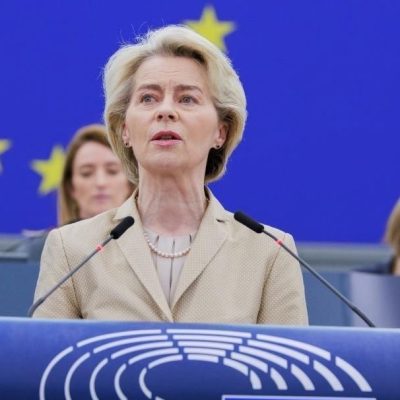
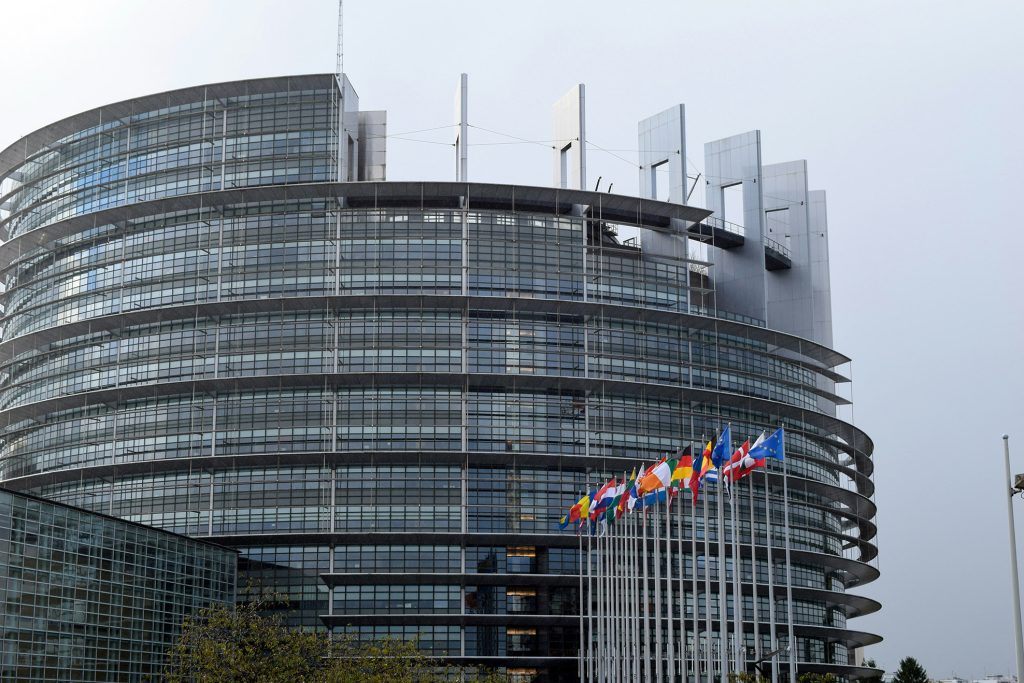
Halfway through the term, the moment of truth for the centrist majority in the European Parliament – Two Years into the Tenth European Parliament: Political Cohesion and Shifting Dynamics
Authors

 Antonis Papakostas Research Associate, ELIAMEP
 Spyros Blavoukos Senior Research Fellow and Head of the ‘Ariane Condellis’ European Program, ELIAMEP
 Georgios Matsoukas Research Assistant, ELIAMEP
What has become of the European Parliament elected in July 2024 for a five-year term?
At the mid-point of its mandate, have the political dynamics we identified one year in evolved? Is this Parliament leaning further and further to the right, as we often hear?
The two papers we are publishing answer these questions in detail. The first, by Isabelle Marchais, looks at the institutional and political dimension. The second, by our partner ELIAMEP, takes a more quantitative look at voting patterns.
Both papers were discussed at length within the Jacques Delors Institute’s European Parliament Political Observatory. The Observatory is co-chaired by Pascal Lamy and Christine Verger and brings together former and current Members of the European Parliament: Pervenche Berès, Jean-Louis Bourlanges, Monica Frassoni, Fabienne Keller, Alain Lamassoure, Marc Angel, Siegfried Muresan and Daniel Freund.
One of the main lessons is that the pro-European centrist coalition still prevails on most files, but is also increasingly fragile.
Admittedly, alternative majorities of the centre-right and the far right account for only a tiny share of all roll-call votes. At the same time, however, the EPP is confirming its role as the pivotal group. On politically sensitive issues such as migration or the environment, it can impose on its traditional partners alternative majorities formed with groups to its
right.
Votes in the European Parliament depend less on ideology than on how strongly members support European integration. Even so, can the Parliament be seen as a testing ground for a future union of the right? And how are these shifts reflected in certain national dynamics, as several EU Member States head into crucial elections?
These are the questions we seek to answer, with facts and figures in hand.
Authors
- Antonis Papakostas Research Associate, ELIAMEP
- Spyros Blavoukos Senior Research Fellow and Head of the ‘Ariane Condellis’ European Program, ELIAMEP
- Georgios Matsoukas Research Assistant, ELIAMEP